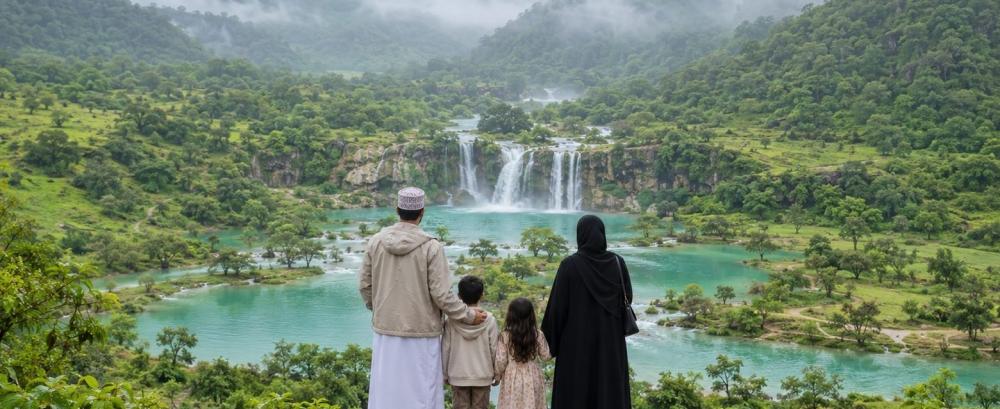
Practical guide · Salalah, Sultanate of Oman
Last updated: September 2026 · By the Traveler.sa Destinations Team · Reading time: 9 minutes
In summer, Salalah in southern Oman turns into an exceptional sight in the Arabian Peninsula: mist, drizzle, green mountains and waterfalls, at a time when the heat intensifies across the rest of the region. This season is known locally as “Khareef” and draws Gulf families every year. In this guide you will find quick facts, a four-day itinerary, the most famous sights, the approximate cost in SAR, and how to travel by air or by road from the Kingdom.
The short answer
Khareef season in Salalah usually runs from about 21 June to 21 September, peaking in July and August. Saudi citizens usually enter Oman with their national ID, and the currency is the Omani rial (about 9.76 SAR). Four days are enough for Wadi Darbat, Al Mughsail, Ain Athum and Jebel Samhan, and the approximate cost at the Khareef peak for five days including flights is 2,750 to 5,700 for a young traveler and 5,550 to 11,300 for a couple.
Destination card
Quick facts about Salalah for Saudis
The most important things to know before booking, in one table:
| Item | Details |
|---|---|
| Entry | GCC citizens enter Oman usually with their national ID. Residents should check the Royal Oman Police e-visa portal. |
| Currency | The Omani rial (OMR), worth about 9.76 SAR; cards are widely accepted. |
| Mobile networks | Omantel, Ooredoo and Vodafone Oman. Or get an Arab countries eSIM before you travel. |
| Flight time | From Riyadh: about two to two and a half hours direct (flynas and Saudia, with more flights during Khareef); from Jeddah: about two and a half hours direct on Saudia's seasonal flights (June–September), and SalamAir has announced direct Jeddah–Salalah flights from the end of October 2026; otherwise 5–7 hours with a stop via Muscat or Riyadh. SalamAir also connects Dammam with Salalah directly. |
| Time difference | Oman is one hour ahead of Saudi Arabia. |
| Electricity | 240 volts, with British three-pin plugs (Type G), usually the same as in Saudi Arabia. |
| Best time | Khareef, from about 21 June to 21 September, for greenery and mist; winter for beaches and sunny weather. |
| Halal food | Food is halal throughout the city. |
General information up to date as of September 2026. Flight schedules are seasonal, so check them before booking. Flight times are approximate and vary by departure city, airline and stopovers.
Second
What is Khareef season in Salalah?
In summer, the Dhofar region is affected by themonsoon winds, so temperatures drop, mist covers the mountains, light drizzle falls, and the valleys and plains turn green. This transformation makes Salalah a favorite summer destination for Gulf families, because it offers mild weather at a relatively short distance.
The season runs usually from about 21 June to 21 September, peaking in July and August , when the greenery and mist are at their most vivid, and demand for accommodation, flights and rental cars rises with them. At the beginning and end of the season, crowds are lighter and prices relatively calmer.
Ready-made plan
4-day Salalah itinerary
This plan balances sights and rest and suits families, with an early start each day to avoid peak crowds:
| Day | Destination | Suggested plan |
|---|---|---|
| Day 1 | The city | Settle into your accommodation, then visit Al Baleed Archaeological Park and the Land of Frankincense Museum, and Al Haffa Souq in the evening. |
| Locations on Google Maps: Al Baleed Archaeological Park · Museum of the Frankincense Land · Al Haffa Souq | ||
| Day 2 | Wadi Darbat and Taqah | The wadi early in the morning before the crowds, then the Sumhuram archaeological site near Khor Rori, and Ain Athum or Ain Razat in the afternoon. |
| Locations on Google Maps: Wadi Darbat · Sumhuram | ||
| Day 3 | The west coast | Al Mughsail Beach and its natural blowholes, with a coastal outing and time for the roadside coconut and banana stalls. |
| Location on Google Maps | ||
| Day 4 | Jebel Samhan | Drive up the mountain for the view on a clear day, then free time for shopping before departure. |
| Location on Google Maps | ||
Only have 3 days? Combine the city and Al Haffa Souq on the evening of arrival, then Darbat on the second day and Al Mughsail on the third.
Fourth
The most famous tourist places in Salalah
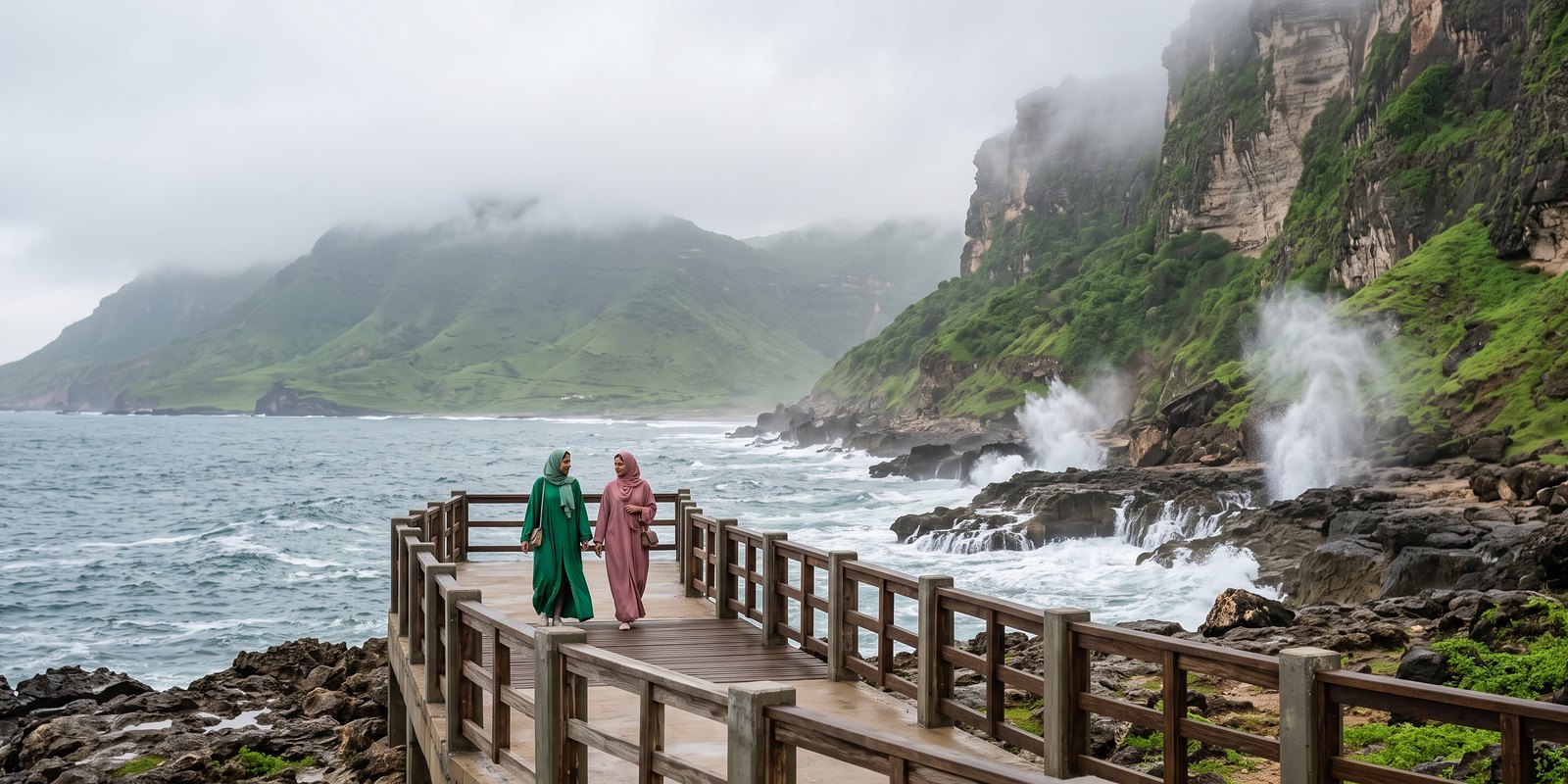
Al Mughsail Beach, Salalah: stay behind the railings at the blowholes, as Khareef waves are strong.
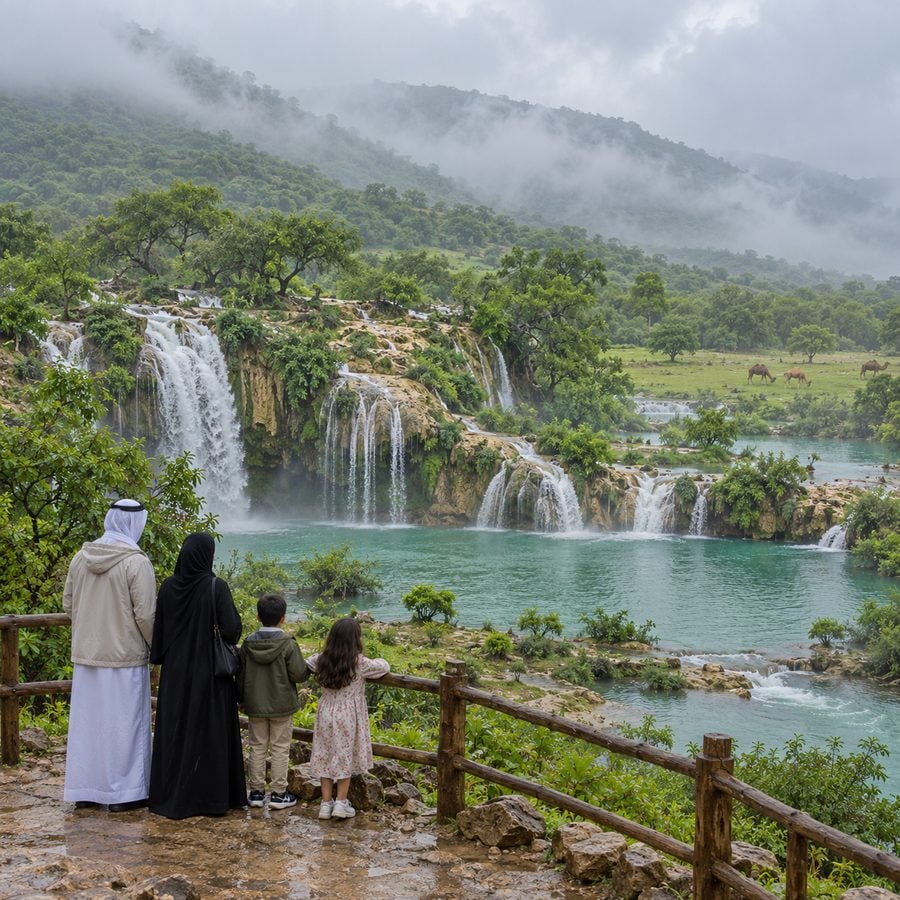
Wadi Darbat is the season's most famous sight: a green valley with waterfalls and a lake, suited to family outings, but it is one of the most crowded places, so visit early. As for Al Mughsail Beach , it is bordered by rocky cliffs and famous for its natural sea blowholes that shoot up through openings in the rocks with the movement of the waves.
At Ain Athum and Ain Razat there are natural springs amid greenery for quiet family gatherings, while Jebel Samhan gives you a wide view over the plains and coast with cooler weather than the city. The following table lists the top places and why to visit them:
| Place | Area | Why visit |
|---|---|---|
| Wadi Darbat | East of Salalah near Taqah | Waterfalls, a lake and dense greenery during Khareef. |
| Location on Google Maps | ||
| Al Mughsail Beach | West of Salalah | Rocky cliffs and natural sea blowholes. |
| Location on Google Maps | ||
| Ain Athum and Ain Razat | Outskirts of Salalah | Springs and quiet family gatherings. |
| Locations on Google Maps: Ain Athum · Ain Razat | ||
| Jebel Samhan | Eastern Dhofar | A wide view and cooler weather, so bring a jacket. |
| Location on Google Maps | ||
| Al Baleed Archaeological Park | Inside Salalah | One of the “Land of Frankincense” World Heritage sites, with the Land of Frankincense Museum. |
| Location on Google Maps | ||
| Sumhuram and Khor Rori | Near Taqah | An ancient frankincense trading city on a natural inlet. |
| Locations on Google Maps: Sumhuram · Khor Rori | ||
| Al Haffa Souq | Central Salalah | Frankincense, incense, perfumes and gifts. |
| Location on Google Maps | ||
For more, see the Official Oman tourism website.
Fifth
Where to eat in Salalah?
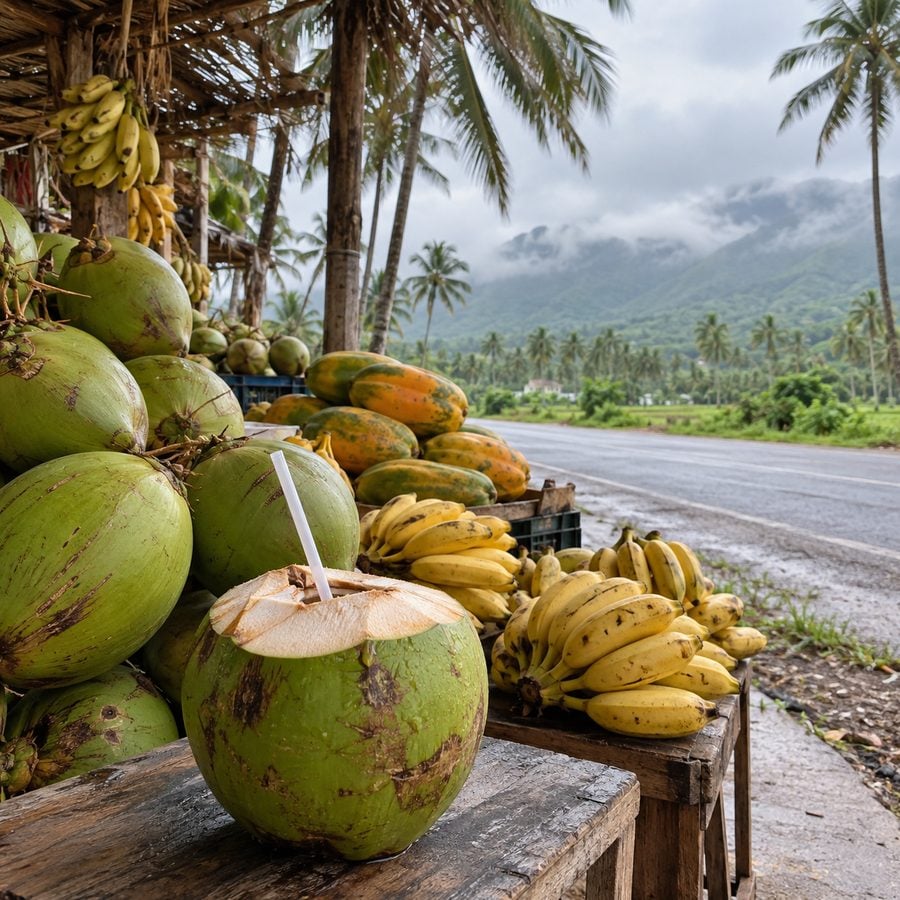
One of Salalah's distinctive experiences is the roadside stalls selling fresh coconuts , bananas and locally grown tropical fruit, found along the roads between farms. In restaurants you will find grills and fresh fish from the Arabian Sea, and Omani dishes such as shuwa andmishkak, alongside Omani halwa with coffee.
Food is halal throughout the city, and Arab and Indian restaurants are common in the main neighborhoods. At the height of the season, well-known restaurants fill up in the evening, so have dinner early or order it to your accommodation, and bring snacks and water on mountain and wadi trips.
Budget
How much does a trip to Salalah from Saudi Arabia cost?
An approximate estimate in for a 5-day (4-night) trip at the Khareef peak (July and August): a shared room and a car split among friends for young travelers, and a private double room in a hotel or furnished apartment (about 40–80 OMR per night) with a rental car for couples:
Approximate cost of a 5-day Khareef trip in
| Item | Young travelers (per person) | Couple (for two) |
|---|---|---|
| Return flight tickets | 1,000–2,200 | 2,000–4,400 |
| Accommodation, 4 nights | 800–1,600 (shared room) | 1,600–3,100 (double room) |
| Food | 400–800 | 800–1,600 |
| Car and fuel | 400–800 (shared) | 900–1,700 |
| Internet and miscellaneous | 150–300 | 250–500 |
| Approximate total | 2,750–5,700 | 5,550–11,300 |
Estimates for the summer season (Khareef peak in Salalah) as of September 2026; young travelers per person in shared accommodation, couples for two in a private double room. They vary by departure city, booking date and type of accommodation, and the exchange rate is close to 9.76 per Omani rial. They do not include shopping. On a road trip, the flight item drops and fuel and overnight stops on the way are added.
Seventh
Traveling to Salalah by air
There are flights to Salalah Airport, and this is the fastest and most comfortable way, especially for families with children. From Riyadh, direct flights on flynas and Saudia take about two to two and a half hours, with more during Khareef season; from Jeddah, Saudia's seasonal direct flights run from June to September (about two and a half hours); SalamAir connects Dammam with Salalah directly; many flights are available via Muscat (about 5–7 hours including the stop); and SalamAir has announced direct flights from Jeddah starting from the end of October 2026. Demand rises during the season, so book as early as possible.
If you arrive by air you will need transport, because the sights are spread between the mountains and the coast. A rental car is the most flexible option; book it with your flight, as demand for cars also rises at the peak.
Eighth
Traveling to Salalah by road
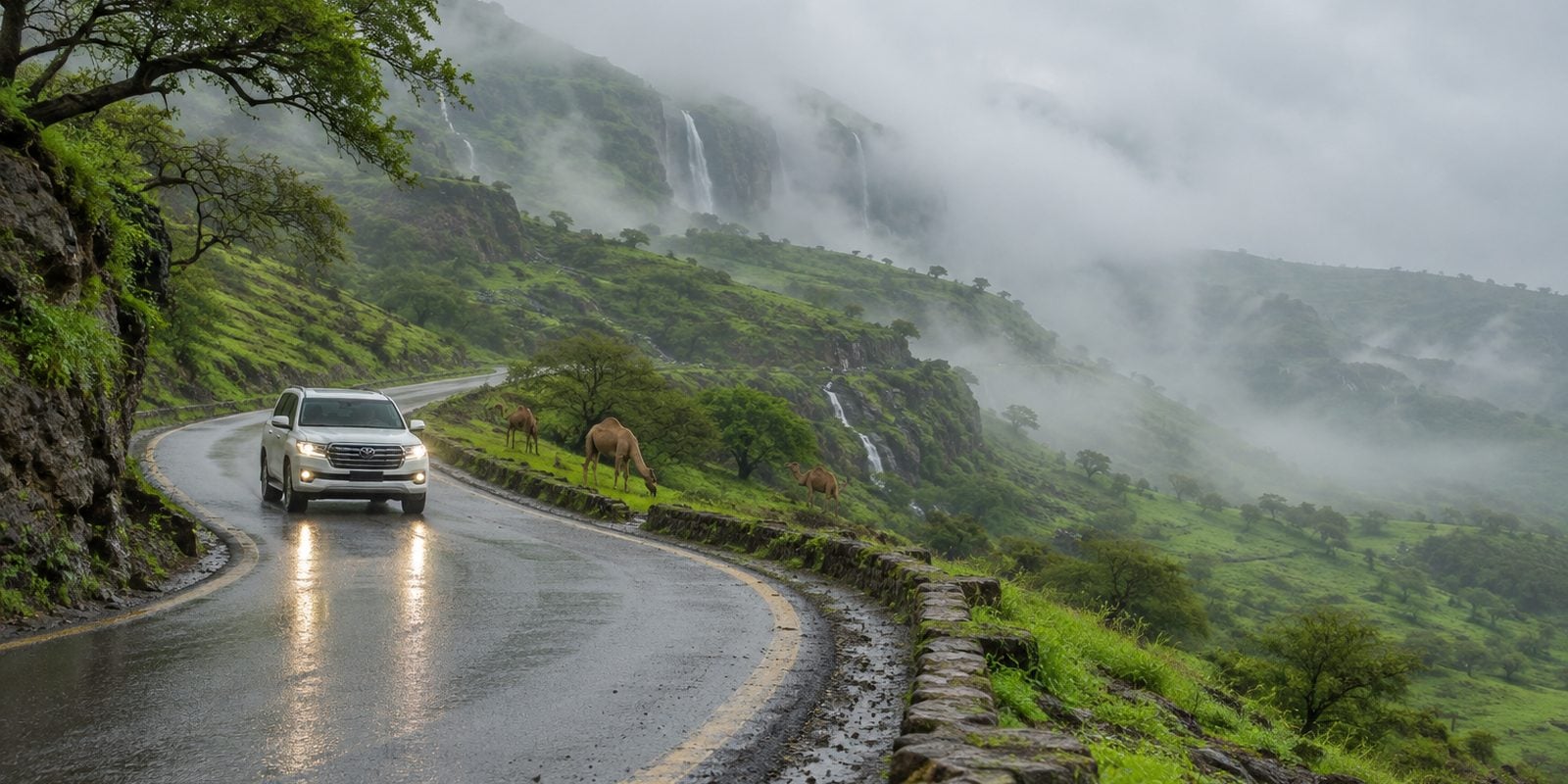
Dhofar roads during Khareef: greenery, mist and drizzle; driving here requires low speed and proper lights.
The road trip is long and requires planning for rest stops and fuel, but it gives you the freedom to get around in your own car throughout your stay. Many travelers take the direct land route through the Empty Quarter between the Kingdom and Oman, so check the border crossing's status and opening hours before setting off.
- Make sure you have vehicle insurance valid in Oman , such as Arab Shield insurance.
- Check the car thoroughly: tires, air conditioning, oil and the spare tire.
- Plan rest and fuel stops in advance, and do not count on finding stations on every stretch of the road.
- Split the drive over more than one day if you are traveling with children, and avoid long night driving.
- Carry enough water and a car charger for your phone.
Ninth
Driving and getting around in Salalah
GCC citizens usually drive with their home country's license, while residents should check the requirements for their nationality, and rental companies may ask for an international driving license. During Khareef season, driving requires extra caution:
- Mist reduces visibility on mountain roads, so slow down and use the appropriate lights.
- Roads may be wet and slippery because of the drizzle.
- Watch out for livestock and camels on the roadsides in mountain areas.
- Crowds build up at the famous sights on weekends, so start your day early.
Tenth
Tips for a comfortable family trip
- Bring spare clothes for the children, as drizzle and wet ground in the wadis can soak clothes quickly.
- Plan family sit-downs at the natural springs and green lawns instead of constantly moving around.
- Stay away from the edges of the rocky cliffs at Al Mughsail Beach, and keep a close eye on the children.
- Book accommodation close to the sights you plan to visit more than once to reduce driving in the mist.
If you are looking for other family destinations close to the Kingdom, read 7 family destinations for the Eid holiday.
Before you travel
Packing checklist
- National ID or passport, and a visa for residents depending on nationality.
- Book accommodation and a car early for July and August.
- An eSIM for Arab countries that covers Oman.
- Travel insurance that covers medical emergencies.
- A light drizzle-resistant jacket, and shoes suitable for wet ground.
- Vehicle insurance valid in Oman if you are traveling in your own car.
For more cool summer destinations, read The 7 best cool destinations in summer and9 cool destinations to travel to in August.
Quick answers
Frequently asked questions
What is the best itinerary for Salalah?
A day for the city, Al Baleed and Al Haffa Souq; a day for Wadi Darbat and Ain Athum; a day for Al Mughsail and the west coast; and a day for Jebel Samhan.
How much does travel to Salalah from Saudi Arabia cost?
At the Khareef peak, roughly 2,750 to 5,700 for a young traveler and 5,550 to 11,300 for a couple for five days, including flights, accommodation and a car.
When does Khareef season in Salalah start and end?
Usually from about 21 June to 21 September, peaking in July and August.
Do Saudis need a visa for Oman?
GCC citizens usually enter with their national ID without a visa, and residents should check the requirements for their nationality through the Royal Oman Police e-visa portal. Those traveling in their own car need vehicle insurance valid in Oman, such as Arab Shield.
What is the best mobile SIM in Salalah?
Omantel, Ooredoo and Vodafone Oman are the main networks, or use an Arab countries eSIM set up before you travel.
How long is the flight from Saudi Arabia to Salalah?
From Riyadh about two to two and a half hours direct; from Jeddah about two and a half hours on Saudia's seasonal direct flights during Khareef (June–September), or 5–7 hours with a stop via Muscat or Riyadh outside that period; and SalamAir has announced direct flights from Jeddah from the end of October 2026.
Our services
Prepare your trip with us
Official sources for further reading
Official Oman tourism website · Royal Oman Police e-visa portal
Heading to Salalah next Khareef?
We prepare Arab Shield insurance for your car, travel insurance and internet, and residents' visas depending on nationality. Contact us by phone or WhatsApp on our unified number.
Note: Entry and visa requirements may change, and the final decision to grant a visa rests with the embassy or the competent authority. The information in this article is up to date as of September 2026, and it is always advisable to check with the official authority before you travel.