Practical guide · Luxembourg
Last updated: October 2026 · By the Traveler.sa Destinations Team · Reading time: 7 minutes
Luxembourg is one of the smallest countries in Europe, yet many travelers ask about it: Where is it? Is it worth visiting? The answer is that it easily deserves two or three days. A capital built on rocky cliffs listed as a World Heritage Site, castles in the middle of forests, and free public transport across the whole country. In this guide we introduce you to its location, the top things to see and what to prepare before traveling from Saudi Arabia.
The short answer
Luxembourg is a small country in Western Europe between Belgium, Germany and France. Its capital is Luxembourg City, its currency is the euro, and it is part of the Schengen Area, which is named after one of its villages. Public transport has been free since 2020. Two to three days are enough, and it combines easily with Belgium, Germany or France. The best time to visit is from May to September.
First
Where is Luxembourg?
Luxembourg is located in Western Europe, and it is a landlocked country with no coastline. It borders Belgium to the west and north, Germany to the east, and France to the south.
Its area is only about 2,586 km², and its population is about 690,000. It is a Grand Duchy, meaning it is headed by a Grand Duke, and it is the only one left in the world with this status.
Despite its size, its standing in Europe is significant: it is a founding member of the European Union, and in the village of Schengen on its territory, the agreement that gave the Schengen Area its name was signed.
Second
Quick facts about Luxembourg
Luxembourg in numbers
| Item | Details |
|---|---|
| Capital | Luxembourg City |
| Languages | Luxembourgish, French and German; English is widely spoken |
| Currency | Euro |
| Visa | Part of the Schengen Area |
| Time zone | Central European Time |
| Airport | Luxembourg International Airport, close to the capital |
| Public transport | Free nationwide since 2020 |
Figures and information are general and subject to change.
Don't worry about the many languages: signs and menus are usually written in French, and most staff in hotels, restaurants and shops speak English. About half of the country's population are foreigners, so dealing with visitors is the norm.
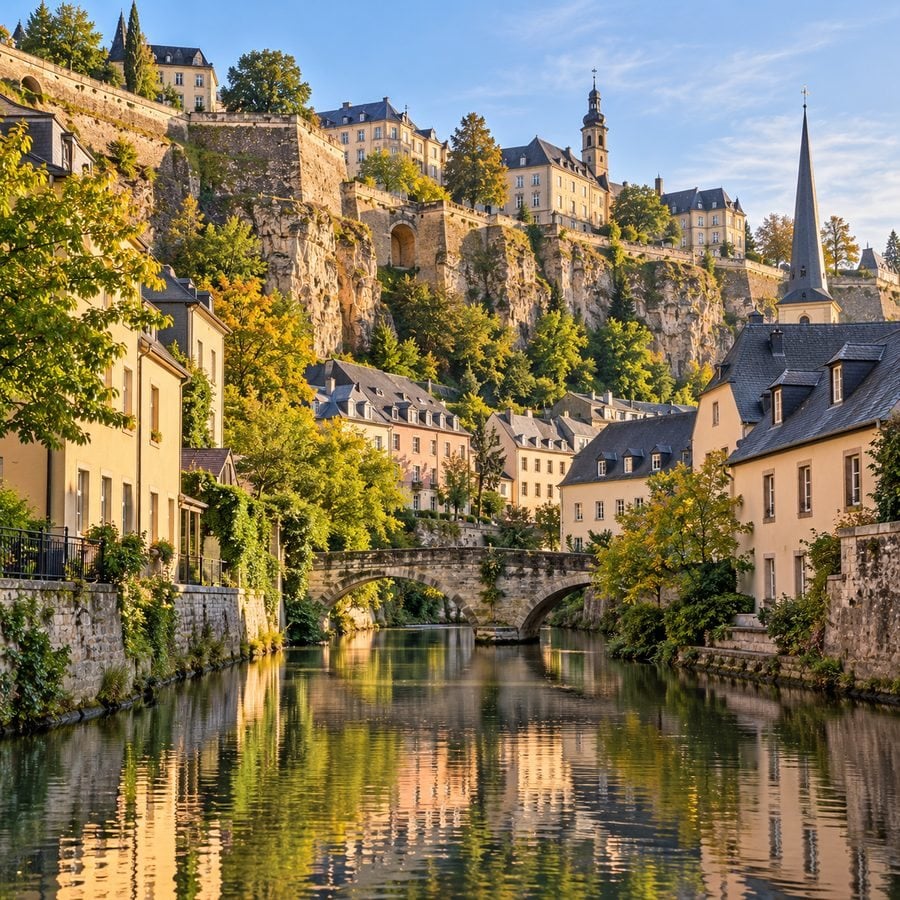
Luxembourg City was one of the strongest fortified cities in Europe until its walls were demolished in 1867. What remains of those fortifications and tunnels gives the capital its unique shape today: an upper town on the rock and a lower town in the valley.
The highlight of the table is free public transport: buses, trams and trains within Luxembourg require no tickets in standard class, for residents and visitors alike. This makes getting between the capital and the villages easy without a car.
Third
Top tourist attractions in Luxembourg
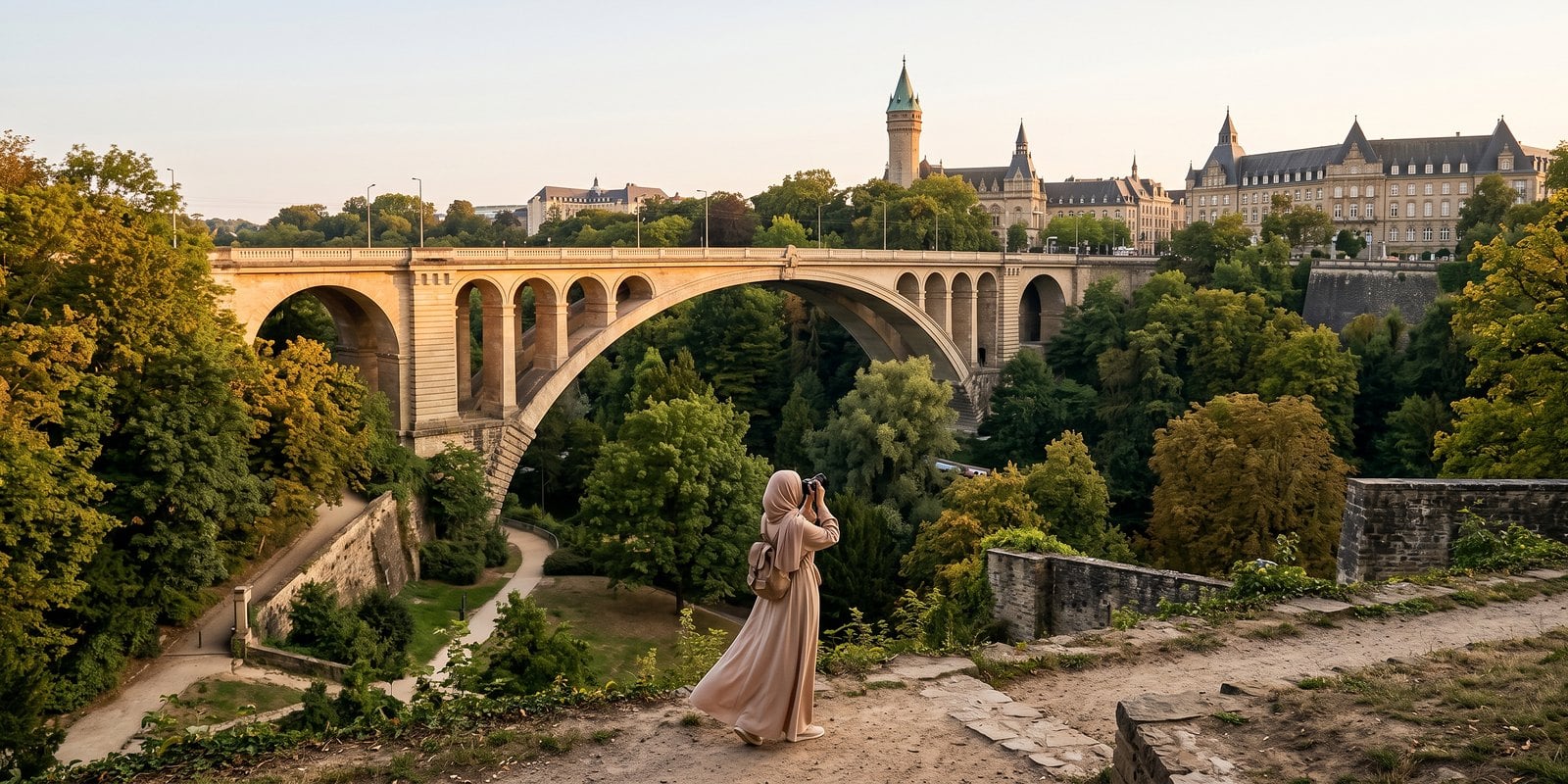
Adolphe Bridge, Luxembourg: the best photo angle is from the Pétrusse Valley path before sunset.
The most famous destinations and why to visit
| Destination | What makes it special | From the capital |
|---|---|---|
| Old Town and fortifications | Historic quarters and fortifications listed as a World Heritage Site since 1994 | Central capital |
| Location on Google Maps | ||
| Grund quarter | An old quarter at the bottom of the valley on the riverbank, with views from the upper promenade | Central capital |
| Location on Google Maps | ||
| Vianden Castle | A large restored castle above a small town in the north of the country | About an hour |
| Location on Google Maps | ||
| Mullerthal region | Hiking trails among rock formations, forests and streams | About 45 minutes |
| Location on Google Maps | ||
| Echternach | The country's oldest town, with a historic abbey and a lake | About 45 minutes |
| Location on Google Maps | ||
| Moselle Valley and the village of Schengen | Riverside villages where three borders meet | About 40 minutes |
| Locations on Google Maps: Moselle Valley · Schengen | ||
Times are approximate and vary by mode of transport.
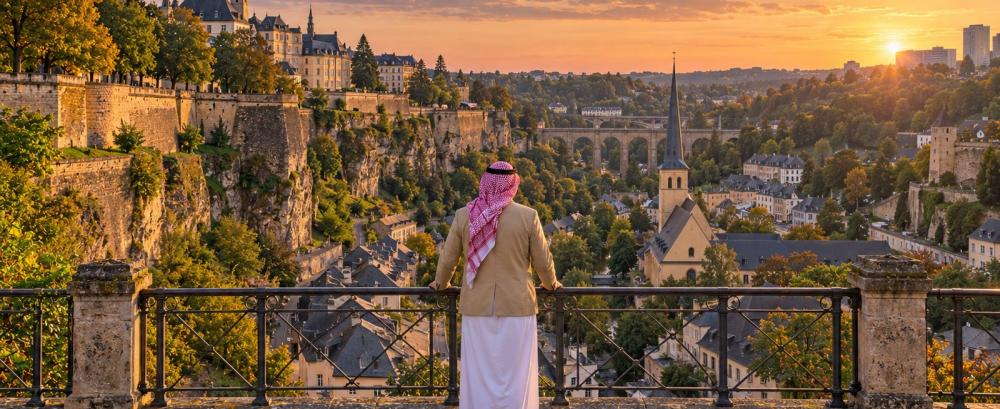
In the capital , start from the promenade overlooking the valley, then go down to the Grund quarter and visit the fortification tunnels carved into the rock. One day on foot is enough.
Outside the capital, Vianden Castle is the country's most famous castle, andMullerthal is the choice for nature hiking lovers. As for Schengen , it is a small, quiet village visited by those who want to stand at the place where the agreement was signed.
Ready-made itinerary
Suggested 3-day itinerary in Luxembourg
| Day | Destination | Program |
|---|---|---|
| 1 | The capital | The Old Town, the upper promenade, the Grund quarter and the fortification tunnels. |
| Locations on Google Maps: Old Town · Chemin de la Corniche · Grund · Bock Casemates | ||
| 2 | Vianden | The castle and town in the morning, then return through the northern countryside. |
| Locations on Google Maps: Vianden Castle · Vianden | ||
| 3 | Mullerthal and Echternach | A short hiking trail among the rocks, then the town of Echternach and its lake. |
| Locations on Google Maps: Mullerthal Trail · Echternach · Echternach Lake | ||
Only have one day? Stick to the capital, which can be fully explored on foot.
Most travelers combine Luxembourg with its neighbors on a single Schengen visa: the train connects it to Brussels in about three hours, and to Paris in about two and a quarter hours by high-speed train. Read Tourism in Belgium for Saudis to plan the Belgian part of your trip.
Fifth
Luxembourg weather and the best time to visit
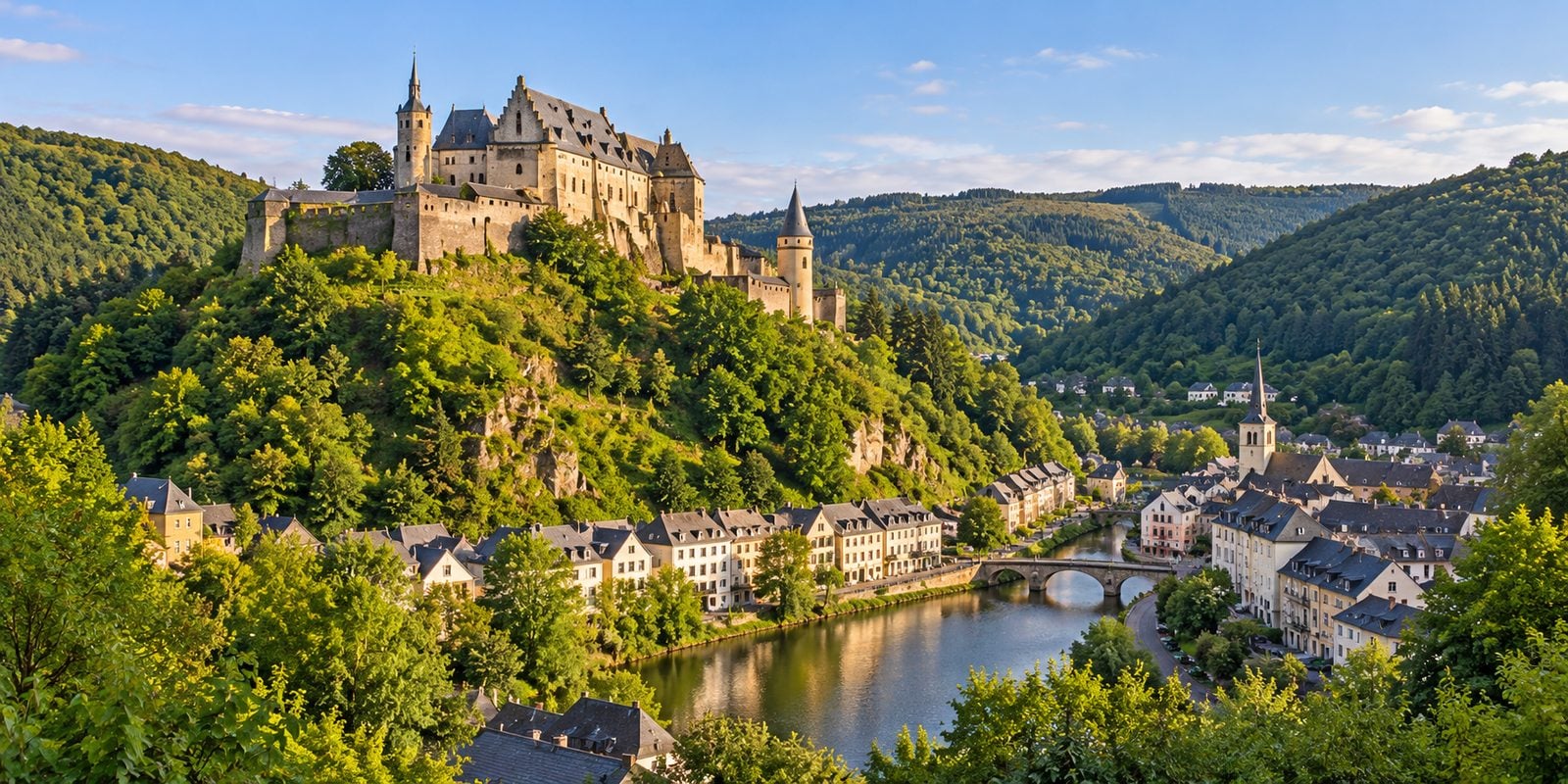
Vianden Castle in northern Luxembourg, the country's most famous castle.
Luxembourg has a mild climate: pleasant summers and cold winters, with rain possible all year round.
- May to September: the best period for walking, views and the countryside.
- October: autumn colors in the forests and valleys.
- December: winter markets in the capital's squares.
Bring comfortable shoes, as the capital is built on two levels connected by slopes, stairs and public elevators.
Sixth
Practical tips for getting around and accommodation
- Stay in the capital: the country is small, and all destinations are day trips from it.
- Use the free transport: you don't need a ticket within the country, but cross-border trips are paid.
- A car is optional: it is useful for Mullerthal and the small villages, and you will need an International Driving License.
- Prices: Luxembourg is one of the most expensive countries in Europe for accommodation and restaurants, so book early.
- Food: halal restaurants are available in the capital in limited numbers; ask about ingredients when in doubt.
Before you travel
What to prepare before traveling to Luxembourg?
- Visa: Luxembourg is part of the Schengen Area, and Saudi citizens usually apply for a Luxembourg visa if it is their main destination. Requirements and processing times depend on the embassy, and the final decision rests with it.
- Bookings: temporary flight and hotel reservations for the visa file; also read the guide to flight reservations for visas.
- Insurance: approved medical insurance is a Schengen visa requirement.
- Internet: a Europe eSIM works from the moment you arrive.
- Flights: you usually arrive with one stopover, or by train from Brussels, Paris or Frankfurt.
Quick answers
Frequently asked questions
Where is Luxembourg?
In Western Europe between Belgium, Germany and France. It is a small landlocked country whose capital is Luxembourg City.
Do Saudis need a visa for Luxembourg?
Luxembourg is part of the Schengen Area, and Saudi citizens usually apply for a Schengen visa before traveling. Requirements depend on the embassy, and the final decision rests with it.
What are Luxembourg's currency and language?
The currency is the euro. The languages used are Luxembourgish, French and German, and English is widely spoken.
Is public transport really free in Luxembourg?
Yes, buses, trams and trains within the country have been free in standard class since 2020, for residents and visitors. Cross-border trips are paid.
How many days are enough to visit Luxembourg?
One day for the capital, and two to three days if you add Vianden Castle and the Mullerthal region.
What is Luxembourg's connection to the Schengen Agreement?
The agreement was signed in the village of Schengen in southeastern Luxembourg on the Moselle River, and the area took its name from it.
Our services
Prepare your trip with us
Official sources for further reading
Official Luxembourg tourism website · UNESCO: City of Luxembourg, its Old Quarters and Fortifications
Planning a trip to Luxembourg?
We prepare your Luxembourg visa file along with the required insurance and bookings. Contact us by phone or WhatsApp on our unified number.
Note: Entry and visa requirements may change, and the final decision on granting a visa rests with the embassy or the competent authority. The information in this article is up to date as of September 2026, and it is always advisable to check with the official authority before traveling.