Practical guide · Travel and wellbeing
Last updated: September 2026 · By the Traveler.sa Destinations Team · Reading time: 8 minutes
The mental health benefits of travel are real but not automatic: many people come back from their trips with new energy and a different outlook, while others return more exhausted than when they left. The difference is usually not the destination but how the trip is planned. In this guide we explain how travel benefits you mentally and how to arrange your trip so you actually get that benefit, with practical tables for choosing the type of trip and avoiding what spoils it.
The short answer
Travel helps break routine, recharge your energy, broaden your thinking, strengthen family relationships and boost self-confidence. To get these benefits: choose the type of trip that suits what you need right now, do not overload your schedule with activities, give your body a day to adjust to the time difference, and prepare your documents early so preparation does not become a source of stress.
First
How does travel benefit you?
A change of environment and a break from routine give the mind a chance to rest. These are the main benefits travelers notice, and how to get each one:
| Benefit | What you notice | How to get it |
|---|---|---|
| Breaking routine | Mental rest and coming back with more energy | Truly step away from work messages during your holiday |
| Broadening your thinking | New ideas and a deeper understanding of people | Visit markets and museums and try local food |
| Strengthening relationships | Shared memories and closer bonds | Set aside shared time without phones |
| Self-confidence | Greater self-reliance | Plan and get around on your own for part of the trip |
| Nature and movement | A feeling of calm and energy | Walk daily in parks and on trails |
These benefits do not come automatically with a plane ticket, but with how the days themselves are spent. A short, calm trip may give you more than a long, packed one.
Second
Why do some travelers come back exhausted?
A trip planned in a hurry, or packed with activities from morning to night, can become another version of work pressure. Another common cause is leaving procedures such as the visa or insurance to the last minute, so the trip starts with anxiety instead of excitement.
- A packed schedule that leaves no time for rest or free wandering.
- Frequent moves between many cities in a few days.
- Keeping up with work and messages throughout the holiday.
- Very high expectations of the trip, and disappointment at the first change of plan.
- Returning to work the morning after a long trip.
Avoid them
Problems that spoil a trip’s effect and how to deal with them
Most of what steals a holiday’s calm can be anticipated. This table summarizes the most common ones:
| Problem | How to avoid it | What to do if it happens |
|---|---|---|
| Jet lag fatigue | Book a daytime arrival flight, and sleep well before traveling | Adjust your sleep to the destination’s time, and get out in daylight |
| A packed schedule | Two main activities a day at most | Cancel one activity and take half a day off |
| Paperwork anxiety | Prepare your visa and insurance early | Go through your packing list calmly and ask for help |
| Work messages | Arrange for someone to cover for you before you travel | Set one short time a day to reply |
| Disagreements with travel companions | Agree on the budget and itinerary in advance | Set aside some time for separate activities |
| Post-trip slump | A rest day before going back to work | A gradual return to tasks and a plan for your next trip |
The time difference deserves your attention
According to the US Centers for Disease Control and Prevention (CDC), if you cross three time zones or fewer, the tiredness you feel is usually travel fatigue rather than jet lag, and it usually eases within one to three days; with larger differences, the body clock needs longer to adjust gradually. Traveling east makes it harder to fall asleep at your usual time, while traveling west causes early waking. For trips longer than two days, it recommends trying to adapt quickly to sleep times at the destination, and exposure to light at the right time helps the body clock adjust.
In practice: do not put the most important activity of your itinerary on the first day, especially on long trips east to Asia or west to the Americas.
Practical steps
How to make your trip relaxing, not exhausting
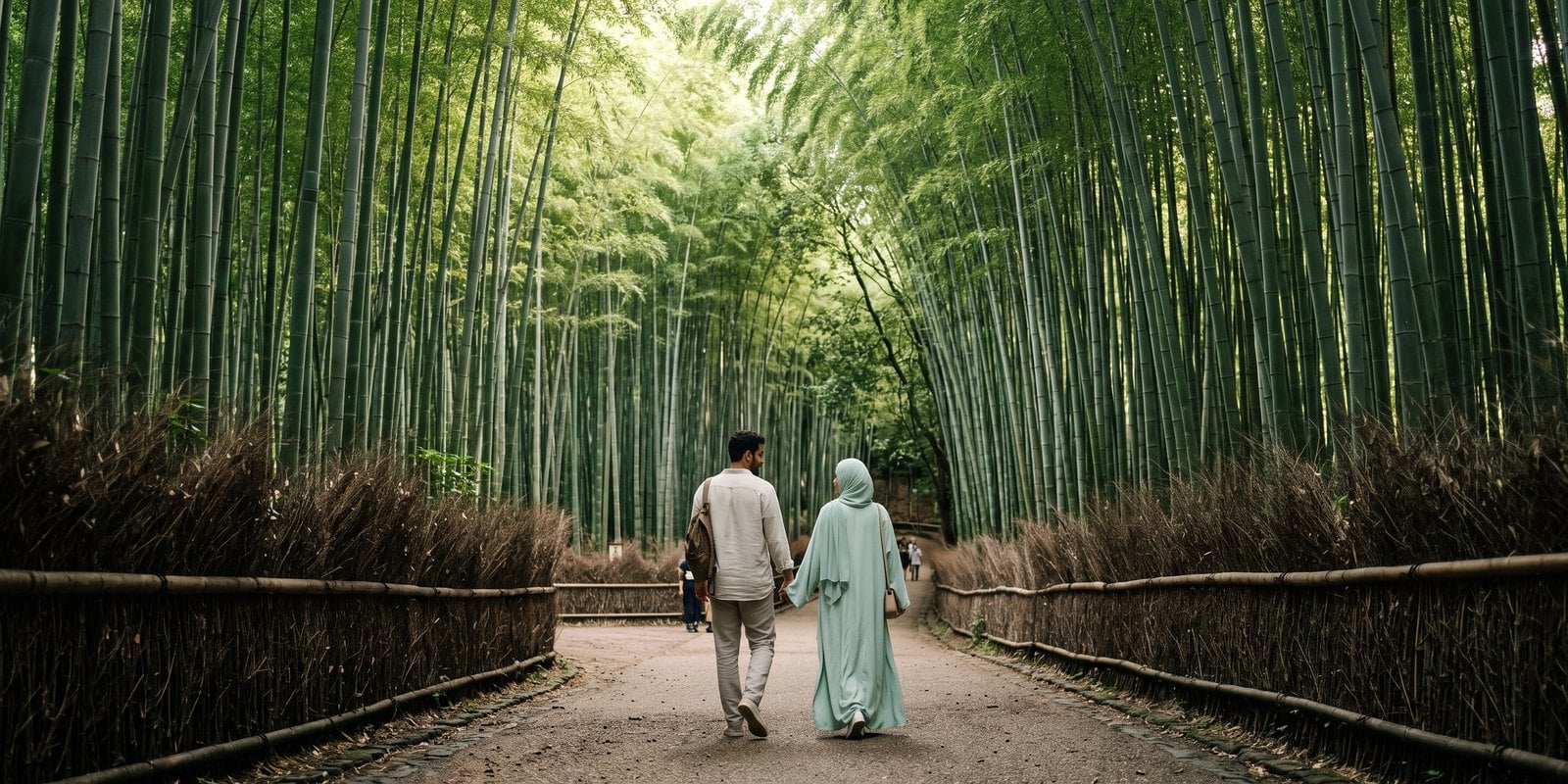
Arashiyama Bamboo Grove, Kyoto: go right after sunrise to enjoy its calm before the crowds.
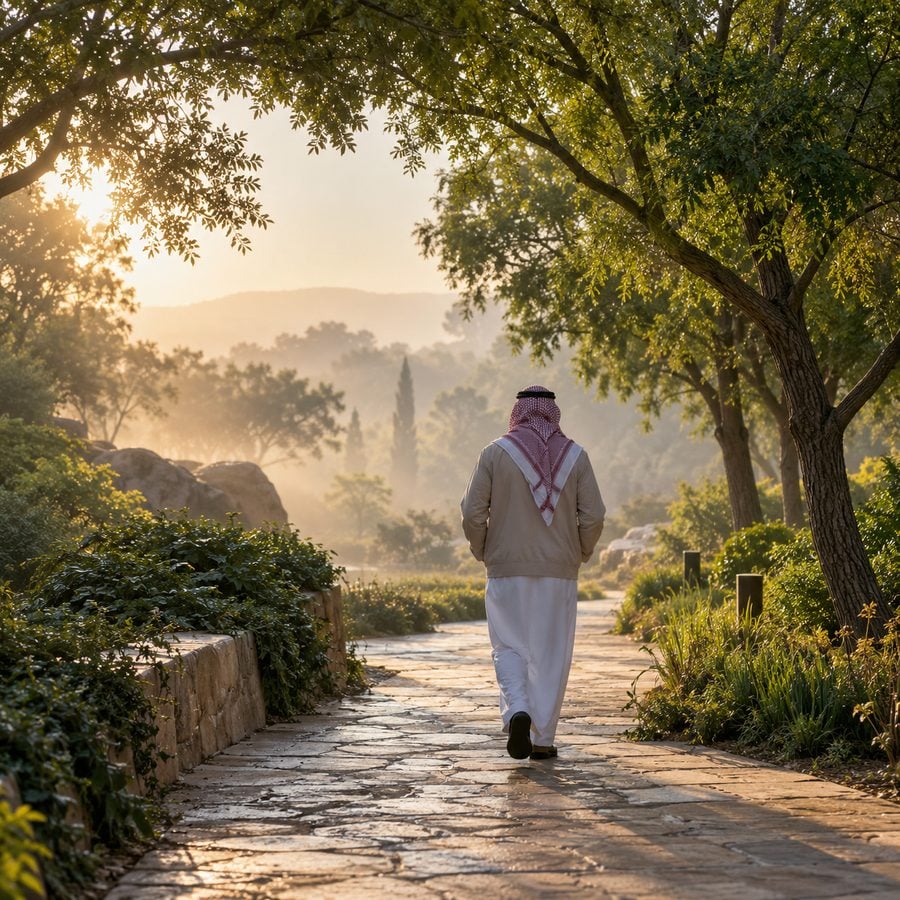
Comfort when traveling is a decision you make before booking: fewer cities, comfortable accommodation close to the places you plan to visit, and deliberate free time in the schedule. Travelers who leave room for surprises enjoy themselves more than those chasing a long list of sights.
Walking is one of the simplest and most beneficial ways to relax: it moves your body, introduces you to the place at a calm pace, and costs nothing. Include a walk every day in a park, along a waterfront or in an old neighborhood.
- Do not fill the schedule completely, and leave time to rest.
- Choose a destination that suits your interests and energy, not what others choose.
- Prepare your documents early: the visa,insuranceandinternet, to avoid last-minute stress.
- Reduce using your phone for work during the holiday as much as possible.
- Give yourself a day to rest after returning before going back to work.
Note
Travel supports a sense of wellbeing, but it is no substitute for consulting a specialist when you need psychological support.
Choosing a destination
Which type of trip suits you?
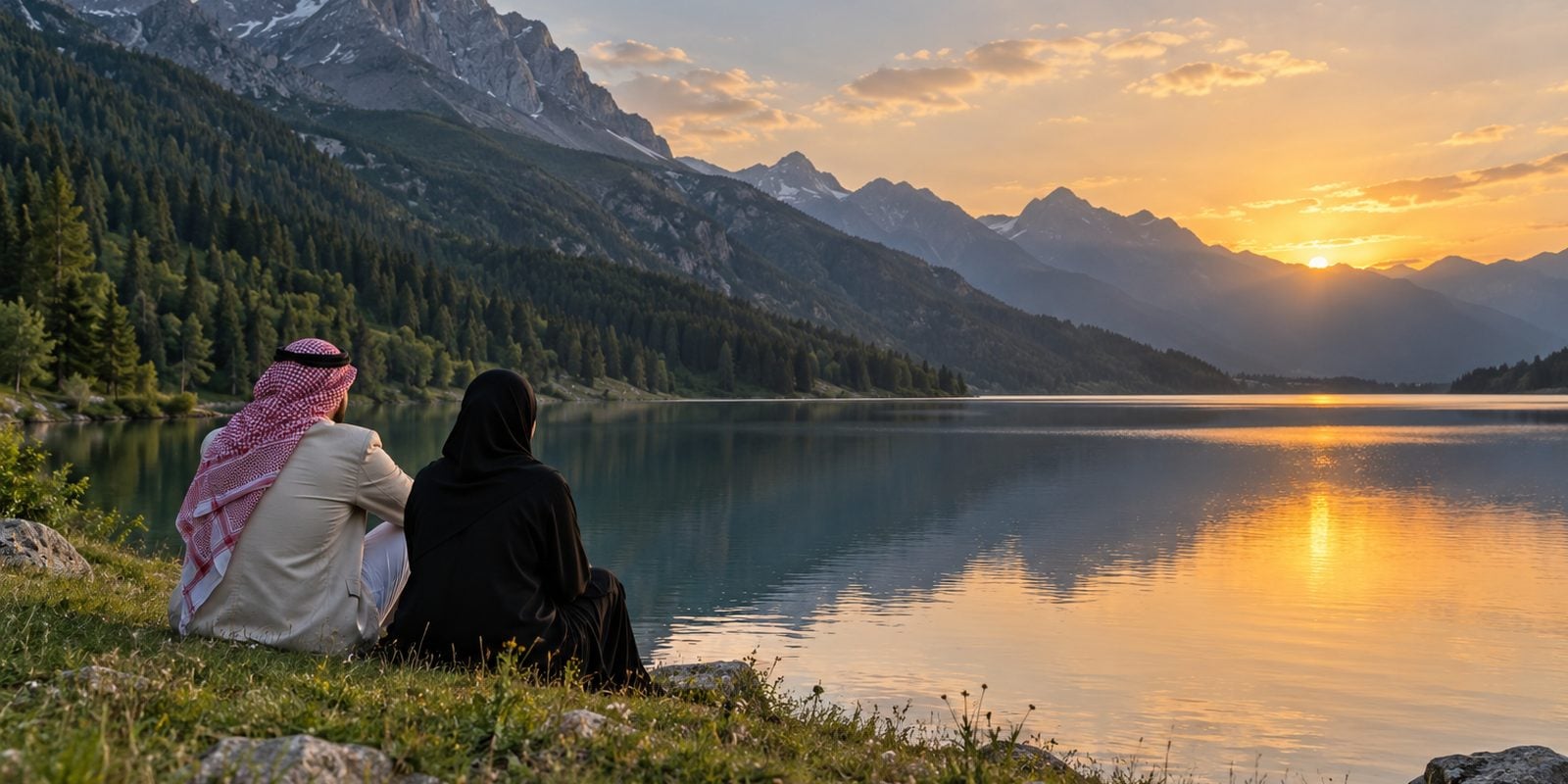
Calm natural destinations suit those who need real rest more than a packed schedule.
Not all trips have the same effect, so choose the type that suits what you need right now:
| What you need now | Type of trip | Examples |
|---|---|---|
| Calm and relaxation | Nature, mountains and lakes | Georgia, Norway, Abha and AlUla |
| Locations on Google Maps: Georgia · Norway · Abha · AlUla | ||
| Renewal and excitement | A city with a different culture and a light schedule | Prague, Turkey |
| Locations on Google Maps: Prague · Turkey | ||
| Time with family | A nearby destination with easy procedures | 7 family destinations for the Eid holiday |
| Self-reliance | Solo travel to a safe destination | Solo travel destinations |
| A quick break | A nearby weekend getaway | Doha (about an hour and a half by air from Riyadh), or Taif and Abha |
| Locations on Google Maps: Doha · Taif · Abha | ||
Entry requirements vary by destination and nationality, so check them before booking.
Travel companions
Alone, with family or with friends?
Each kind of company has a different effect on the trip. Traveling with family strengthens bonds and creates shared memories, but it needs an itinerary that suits everyone and a slower pace. Traveling with friends gives you energy and shared experiences, but requires agreeing in advance on the budget and type of activities. Solo travel gives you complete freedom to choose your pace and clearly strengthens self-reliance.
- With family: choose comfortable accommodation close to activities, and leave rest breaks for the children.
- With friends: agree on the budget and itinerary before traveling to avoid disagreements.
- Alone: choose a safe destination that is easy to get around, and share your itinerary with someone you trust.
During the trip
Simple habits that make a difference
- Walk a lot, as walking is the best way to discover a place and move your body at the same time.
- Sleep well, and do not sacrifice hours of sleep for an extra activity in the schedule.
- Try at least one new thing: local food or an activity you have never tried before.
- Set aside time with no plan: a cafe, a park, or time by the sea.
- Capture your moments in photos, but do not let photography distract you from living the moment.
These habits need no extra budget, but they change how you come back from your trip.
Before you travel
A packing checklist that reduces stress
A large part of travel-related stress comes from postponed details. Sort them out well before your trip:
- Check your passport validity and the destination’s entry requirements for your nationality.
- Apply for your visa early if one is required, especially during holiday seasons.
- Book travel insurance that covers medical emergencies and trip cancellation.
- Get an internet SIM before takeoff so you are connected from the moment you arrive.
- Save digital copies of your passport and bookings on your phone.
- Sort out work matters before you travel, and decide who will follow up while you are away.
For a fuller list, read The 8 most important services you need before traveling.
After you return
Keep the trip’s effect going
Many people lose the effect of their holiday within days of returning. One rest day before going back to work, and a gradual return to tasks, help you keep the energy you gained. You can also start thinking about your next trip, as planning something to look forward to gives you extra motivation.
- Sort your photos and pick the best within a few days of returning, as looking through them brings back the atmosphere of the trip.
- Write down what you liked and did not like, so you can use it on your next trip.
- Keep one habit you picked up while traveling, such as a daily walk or trying new dishes.
And if you are trying to combine work and travel, read How to combine work and holiday when traveling.
Quick answers
Frequently asked questions
What are the benefits of travel for mental health?
It helps break routine, recharge your energy, broaden your thinking, strengthen relationships and boost self-confidence, provided the trip is relaxing rather than packed.
Are short trips beneficial too?
Yes, even a weekend at a nearby destination helps break the routine.
Which destinations are good for relaxation?
Calm natural destinations such as the mountains of Georgia, Alpine villages and islands, or within the Kingdom, such as Abha and AlUla.
How long does it take to adjust to a time difference?
According to the CDC, fatigue usually eases within one to three days when crossing three time zones or fewer, and is usually travel fatigue rather than jet lag; with larger differences, adjustment takes longer and happens gradually.
How can I avoid stress before traveling?
Prepare your documents early, from the visa and insurance to the internet SIM, and do not leave bookings to the last minute.
Is travel a substitute for consulting a specialist?
No. Travel supports a sense of wellbeing, but it is no substitute for consulting a specialist when you need psychological support.
Our services
Plan your trip with us
Official sources for further reading
Your next trip starts stress-free
We take care of your visa, insurance and internet before you travel, so you can focus on enjoying yourself. Contact us by phone or WhatsApp on our unified number.
Note: This article is for general awareness and is not medical or psychological advice. Travel requirements may change, so check with the official authority before traveling. The information in this article is up to date as of September 2026.