Practical guide · Saving money and staying safe when traveling
Last updated: September 2026 · By the Traveler.sa Destinations Team · Reading time: 9 minutes
Saving money and avoiding scams when traveling both start with planning, and saving does not mean giving up comfort. On the other hand, the biggest drain on a trip budget is falling for a scam, whether before travel through fake websites or during the trip at your destination. This guide brings together, in practical tables, how to lower the cost of your trip, how to protect your money and data, and what to do if you are scammed.
The short answer
Book early and travel outside peak season, pay in the local currency when using your card abroad, use secure payment methods that allow disputes, deal only with trusted, officially registered businesses, and verify any website that asks for your details before paying. If you are scammed, contact your bank immediately, then report it to the competent authorities.
First
How to save money on your trip

Most savings happen before you travel, in booking and timing decisions, not during the trip. Accommodation is a clear example: a serviced apartment with a small kitchen can save a family two meals a day, and staying near a transit station saves many taxi fares throughout the trip.
The following table shows the items that make the biggest difference, and when to decide on them:
| Item | How to save on it | When to decide |
|---|---|---|
| Flights | Book early and be flexible with dates. Read 9 tips for the cheapest flight ticket | Weeks or months before travel |
| Timing | Spring and autumn are usually cheaper than summer and Eid holidays; flights in July and August are often roughly 30–60% more expensive depending on the destination | When choosing your holiday dates |
| Accommodation | A serviced apartment with a kitchen for families, close to transport | Along with booking your flights |
| Internet | An eSIM is usually cheaper than international roaming | Days before travel |
| Transport | Day transit passes and trains instead of taxis | On arrival or before |
| Activities | Compare prices and book the essentials online | Before travel |
Extra savings
Save on your visa and insurance
Apply for your visa early to avoid fees for changing or canceling bookings, and use a temporary reservation instead of paying in full before the visa is issued. This way you won’t lose the cost of a ticket or hotel if the decision is delayed or comes back as a refusal, since the decision ultimately rests with the embassy.
Travel insurance protects you from losses due to cancellation, delays, and lost baggage, and it is a small cost compared with the loss it may cover.
Other items that save you money:
- Set a daily budget for food, transport, and activities, and review it every evening.
- Compare prices of activities and tours before booking, and book the essentials online.
- Carry a refillable water bottle.
- Watch out for currency conversion fees, and choose to pay in the local currency when using your card.
Financial planning
How to set a realistic budget for your trip
Most budget overruns are caused by items that were not counted from the start, not by overspending during the trip. Split your budget into clear items before booking, and leave a margin for emergencies.
| Budget item | What it includes | Tip |
|---|---|---|
| Fixed items | Flights, accommodation, visa, and insurance | Usually paid before travel, so settle them first |
| Getting around at the destination | Airport and hotel transfers, transit passes, and day trips | Count airport trips both ways |
| Food | Daily average per person | One main meal at a restaurant and lighter meals otherwise |
| Activities and tickets | Museums, landmarks, and tours | Book the essentials in advance and avoid add-ons |
| Shopping and gifts | Personal purchases | Set a clear cap before travel |
| Emergency margin | A reserve amount | Don’t touch it unless needed |
Record your daily spending in a simple app or a note on your phone; reviewing the numbers every evening shows early on if you are going over plan.
At the destination
Daily habits that save money during the trip

Public transport like Istanbul's İstiklal tram saves you a lot compared with taxis.
- When paying by card abroad, usually choose to pay in the local currency instead of instant conversion to riyals at the payment terminal, as that conversion may come with a less favorable exchange rate for you.
- Exchange only a small amount at the airport, enough for the first day, and compare exchange rates before any transaction.
- Buy water and snacks from regular shops, not from kiosks in tourist areas.
- Try restaurants on side streets away from the main squares.
- Make the most of parks, open markets, and viewpoints that don’t require tickets.
In European cities in particular, compare the price of a daily or weekly transit pass with the number of trips you actually plan; it saves a lot for those who travel around frequently, and isn’t worth buying for those who walk most of the day.
Second
The most common scams before travel
Fake visa websites
Sites that look like official portals and charge double fees or ask for your card details. Deal only with official government portals or licensed businesses, and verify any company’s commercial registration via the Ministry of Commerce.
Unrealistic booking offers
A price far below the market combined with a request for a direct bank transfer is a red flag. Pay through trusted payment methods that give you the right to dispute.
Fake “customer service” messages and calls
After booking, you may receive a message or call claiming to be from the airline, hotel, or booking company, asking you to “confirm your card,” share a verification code, or pay a fare difference via a link. Trusted companies never ask for your bank verification code, so don’t share it with anyone, and don’t click the link. End the conversation and contact the company yourself through its official number or app, and check your booking from there.
The same applies to social media accounts that impersonate well-known companies and offer “packages” at tempting prices, so verify the official account through the company’s website before any contact.
Signs of a suspicious website or offer:
- A link spelled slightly differently from the official website.
- Excessive urgency such as “the offer ends in minutes.”
- A request to pay by direct transfer to a personal account.
- No clear address, unified number, or commercial registration.
During the trip
Scams at your destination
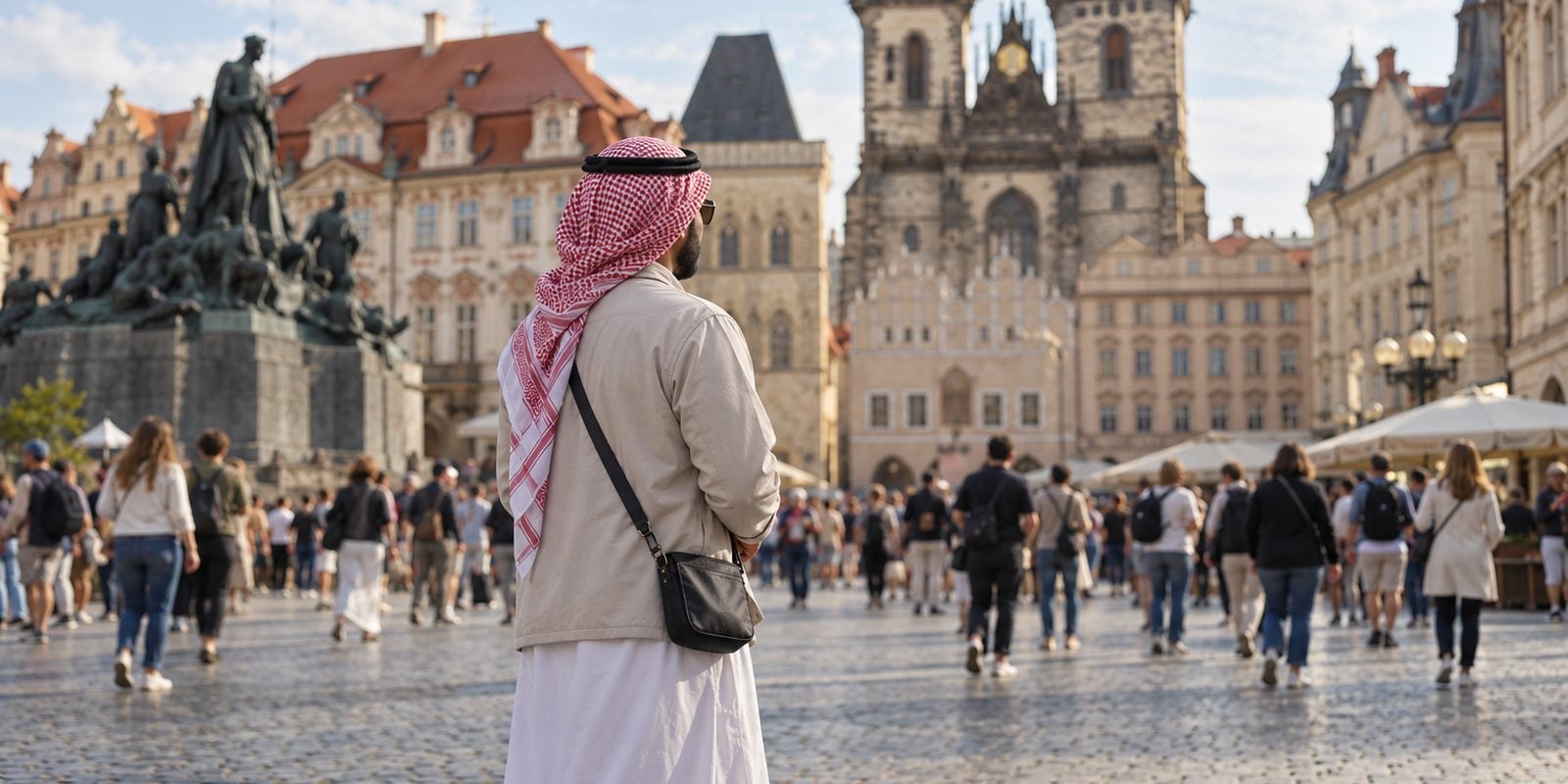
Crowded places are the most prone to distraction theft, so keep your bag in front of you and your wallet in an inside pocket.
This table summarizes the most common situations travelers face, and how to act in each:
| Scam | How to avoid it | What to do if it happens |
|---|---|---|
| Unlicensed taxi | Use well-known apps or official taxis | Photograph the plate and receipt and file a complaint with the competent authority |
| Distraction for theft | Carry limited cash and a zipped bag in front of you | Block your cards immediately and report it to the local police |
| “Help” at the ATM | Use ATMs inside banks | Contact your bank to block the card |
| Public Wi-Fi networks | Use your own mobile data | Change your passwords and monitor your account |
| Instant conversion to riyals at payment | Choose to pay in the local currency | Review your statement and dispute if necessary |
For more common situations and how to avoid them, read The most common travel problems and how to avoid them.
If it happens
What to do if you are scammed
- Contact your bank immediately to block the card and dispute the transaction.
- Inside the Kingdom, you can report it through the official “Kollona Amn” app.
- Outside the Kingdom, report it to the local police and contact the Saudi embassy; its details are available on the website of the Saudi Ministry of Foreign Affairs.
- Keep everything that proves the transaction: messages, receipts, and screenshots.
- Change the passwords for your accounts if you entered them on a suspicious website.
The faster you act, the better the chance of stopping the transaction or recovering the money, so save your bank’s customer service number before you travel rather than searching for it when you need it.
Before you travel
Quick protection checklist
- Verify any travel company’s commercial registration before paying.
- Use a credit card for online bookings instead of a direct transfer.
- Turn on bank transaction notifications on your phone.
- Keep digital copies of your passport, visa, and bookings.
- Carry two cards from two different banks if possible, kept in separate places.
- Save the numbers of your bank and the Saudi embassy at your destination.
And before any trip, review The 8 most important services you need before travel.
Quick answers
Frequently asked questions
How do I make sure a travel company is trustworthy?
Check its commercial registration through the Ministry of Commerce, and confirm it has an address, a unified number, and official payment methods. Traveler.sa is registered under commercial registration no. 4030534489.
Is paying by card safer than cash?
In most cases yes, because it allows you to dispute suspicious transactions, while keeping a small amount of cash for emergencies.
Should I pay in riyals or in the local currency when using my card abroad?
Usually choose the local currency, because instant conversion to riyals at the payment terminal may come with a less favorable exchange rate for you.
How much do I save if I travel outside the summer season?
Flight tickets from Saudi Arabia in July and August are usually roughly 30–60% more expensive than in quieter months, and hotels in Europe, Turkey, and Georgia are about 25–50% more expensive depending on the season and city; these are estimates that vary by route and booking date. So traveling in spring or autumn, or moving your trip to the first weeks of the holiday, saves a large part of the budget. An eSIM is also usually cheaper than international roaming in any season.
Why should I use a temporary reservation for my visa?
To avoid paying the full price of the ticket and hotel before the visa is issued, and cancellation fees if it is delayed or refused.
What is the first thing I should do if my card is stolen?
Contact your bank immediately to block it, then report it to the competent authorities.
Our services
Prepare your trip with us
Official sources for further reading
Ministry of Commerce · Saudi Ministry of Foreign Affairs
Looking for a trusted company to prepare your trip?
We are a company with a commercial registration and use official payment methods. We arrange your visa, temporary reservation, insurance, and internet SIM. Contact us by phone or WhatsApp on our unified number.
Note: Entry and visa requirements may change, and the final decision to grant a visa rests with the embassy or the competent authority. The information in this article is up to date as of September 2026, and it is always advisable to check with the official authority before traveling.