
Practical guide · Travel problems
Last updated: September 2026 · By the Traveler.sa Destinations Team · Reading time: 9 minutes
Most travel problems that ruin trips are not real surprises but predictable results of incomplete preparation: an inconsistent visa file, no insurance, or relying on your phone’s memory alone. This guide includes a comprehensive table of the most common travel problems, how to avoid each one, and what to do if it happens, along with your rights when a flight is delayed or luggage is lost.
The short answer
Prepare your visa file carefully, get travel and medical insurance, keep digital copies of your documents, get an international license if you will drive, and buy a data SIM before you travel. If your luggage is lost, report it before leaving the airport; if your flight is delayed, keep the delay certificate and receipts; and if your passport is lost, contact the Saudi embassy.
Summary in a table
Travel problems table: prevention and response
This table is a quick reference to save before you travel; we then explain each problem in detail in the following sections:
| Problem | How to avoid it | What to do if it happens |
|---|---|---|
| Visa refusal | A complete, consistent file and an early application. | Read the refusal reason and address it before reapplying. |
| Trip cancellation | Travel insurance and a temporary reservation before the visa. | Review the cancellation terms and claim compensation from your insurer. |
| Flight delay | Enough connection time between flights. | Request a delay certificate and keep your receipts. |
| Lost luggage | Two days’ essentials in your carry-on. | Report it at the airport before leaving. |
| Lost passport | A digital copy and the hotel safe. | A police report, then the Saudi embassy. |
| Health emergency | Medical insurance and medicines with their prescriptions. | Call your insurer’s emergency line first. |
| Rental car refused | An international license and a credit card. | Ask for the reason in writing and review the terms. |
| No internet | An eSIM installed before takeoff. | Use airport Wi-Fi to activate an alternative. |
| Scams | Trusted providers and payment through official channels. | Notify your bank immediately and the local police. |
Second
Visa refusal
A refusal is one of the most disruptive things for travel plans, because it often comes after part of the costs has been paid. The common reasons are well known: missing documents, bookings that do not match the travel plan stated in the application, or weak proof of financial means.
To reduce the chance of refusal:
- Make the dates of your bookings, insurance and itinerary match across all documents in the file.
- Provide a recent bank statement and a salary certificate showing you can cover the trip.
- Review the document list of the specific embassy, as requirements differ from one embassy to another.
- Apply early so you have time to complete anything missing.
The safest approach is a complete, consistent file, which is what we handle in our visa service. The final decision always rests with the embassy.
Third
Trip cancellation or delay
Your trip may be canceled for personal or health reasons, or a flight delay may make you miss a connection or your first hotel night. These losses can be reduced if you prepare for them in advance.
First line of protection
Travel insurance
Travel insurance covers cancellation and delays according to the policy terms, so read the exclusions and coverage limits before buying.
Before the visa is issued
Temporary reservation
Avoid paying in full for flights and hotels before your visa is issued by using a temporary reservation for the application.
If your flight departs from an EU airport, or arrives at one on a European airline, EU passenger rights rules give you specific rights in cases of delay, cancellation and denied boarding, unless the cause is an extraordinary circumstance such as weather:
Your rights under EU passenger rights rules
| Situation | What you are usually entitled to |
|---|---|
| Long delay before departure | Meals and a means of communication after two hours for flights up to 1,500 km, 3 hours for medium flights, and 4 hours for long flights. |
| Arriving 3 or more hours late | Financial compensation by distance: 250, 400 or 600 euros. |
| Flight cancellation | Compensation unless you were notified more than 14 days in advance, plus rebooking or a refund. |
| Flight postponed to the next day | Hotel accommodation at the airline’s expense. |
An indicative summary from the official Your Europe portal; details and exceptions are with the airline and the official authority.
Practical tip
When your flight is delayed, ask the airline for a written statement of the reason and length of the delay, and keep receipts for any extra expenses, as you may need them when claiming compensation from the airline or your insurer.
Fourth
Lost luggage
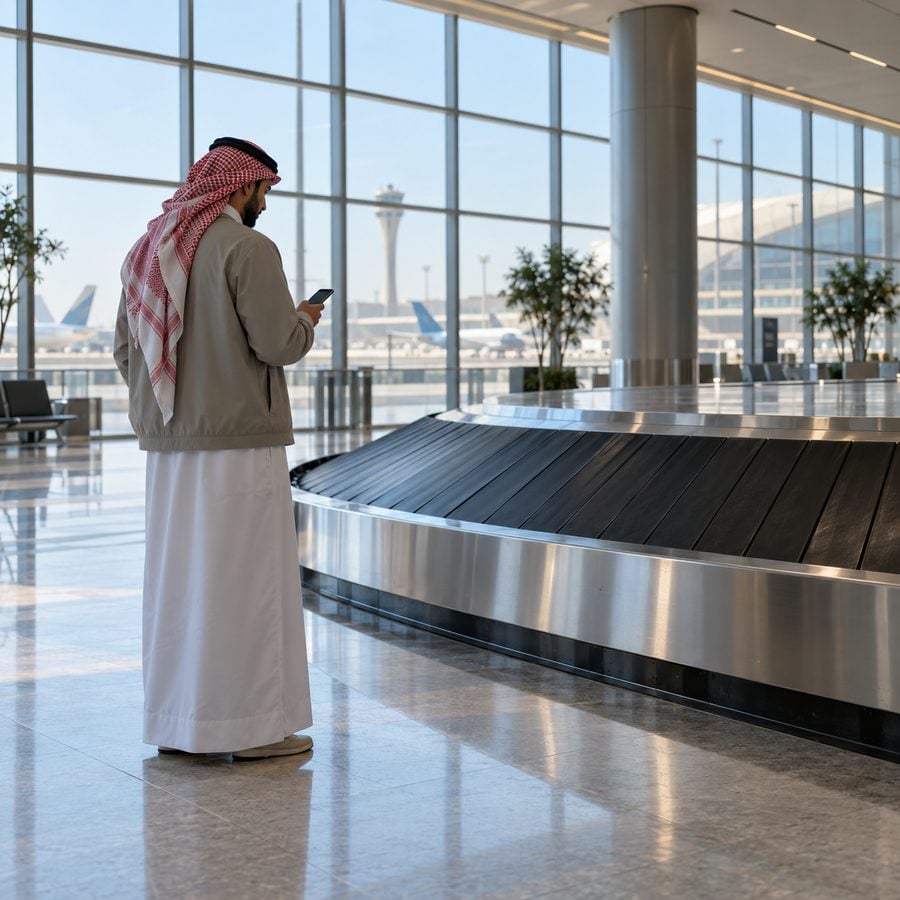
Delayed or lost bags happen more often with connecting flights and short layovers. Acting quickly at the airport itself determines how easily you get it back, as reporting after leaving the airport is much harder.
Always carry one or two days’ essentials in your carry-on: a change of clothes, your medicines, your phone charger and a copy of your documents. Photograph the contents of your checked bag before handing it over, and put a tag with your name and number inside and outside it.
- Report it immediately to the airline’s desk in the arrivals hall before leaving the airport.
- Get the report number and keep the baggage tag attached to your ticket.
- Leave your accommodation address and a working phone number so the bag can be sent to you when found.
- Keep receipts for essential purchases if you need to buy clothes or toiletries temporarily.
Written claim deadlines on flights covered by EU rules
| Situation | Deadline |
|---|---|
| Damaged or lost bag | A written claim to the airline within 7 days. |
| Delayed bag | A written claim within 21 days of receiving it. |
According to the Your Europe portal; deadlines may differ on other flights, so check the airline’s terms.
Fifth
Lost passport
Losing your passport or having it stolen abroad is stressful, but dealing with it is much easier if you have a copy.
- Keep a digital copy of your passport and visa on your phone and in your email.
- Report it to the local police and get a copy of the report.
- Contact the Saudi embassy or consulate in the country you are visiting; their details are available on the website of the Saudi Ministry of Foreign Affairs.
- Leave your passport in the hotel safe on days you do not need it, if this is allowed in the country.
Sixth
Medical emergencies
Illness or injury while traveling is unexpected, and treatment costs in some countries are very high. That is why medical insurance covering treatment abroad is one of the most important things to arrange before any trip, and it is a basic requirement for many embassies.
Before you travel:
- Carry enough of your regular medicines in your carry-on with their prescriptions.
- Save your insurer’s emergency number on your phone.
- Know the local emergency number in the country you are visiting; in EU countries it is 112.
Seventh
Rental car handover refused
Some travelers arrive at the rental desk and are refused the car, most often because they do not have an international driving license when the company or country requires one. The solution is simple: get an international driving license before you travel and carry it with your original license.
Also make sure you have a credit card in the driver’s name, and review the booking terms before you arrive. Read Advantages and requirements of renting a car in Europe andTips for driving in Europe if your destination is in Europe.
Eighth
No internet and roaming charges

In busy cities like Tokyo, activate an eSIM before arrival to navigate right away.
Arriving in a new country without internet means difficulty with maps, ordering a taxi and contacting your hotel, while a roaming bill may surprise you after you return. eSIM Works from the moment you arrive and can be installed before takeoff.
Check before buying
Make sure your phone supports eSIM technology and that your destination is among the countries covered by the plan.
Ninth
Scams
Scammers target travelers with fake accommodation offers, taxis without meters and unofficial money changers. The basic rule: deal with trusted providers and pay through official channels.
- Accommodation: Do not transfer money directly to a personal account outside the booking platform, and refuse any request to complete payment via a link or side conversation.
- Getting around: Take a taxi from the official airport taxi rank or use a well-known ride-hailing app that sets the price in advance.
- Currency exchange: Exchange money at banks or licensed exchange offices, and withdraw from ATMs inside banks rather than standalone machines on the street.
- Cards: Choose to pay in the local currency when the card terminal asks, and enable instant transaction alerts in your banking app.
For details, read our guide How to avoid scams while traveling.
Tenth
Keep your documents in one place
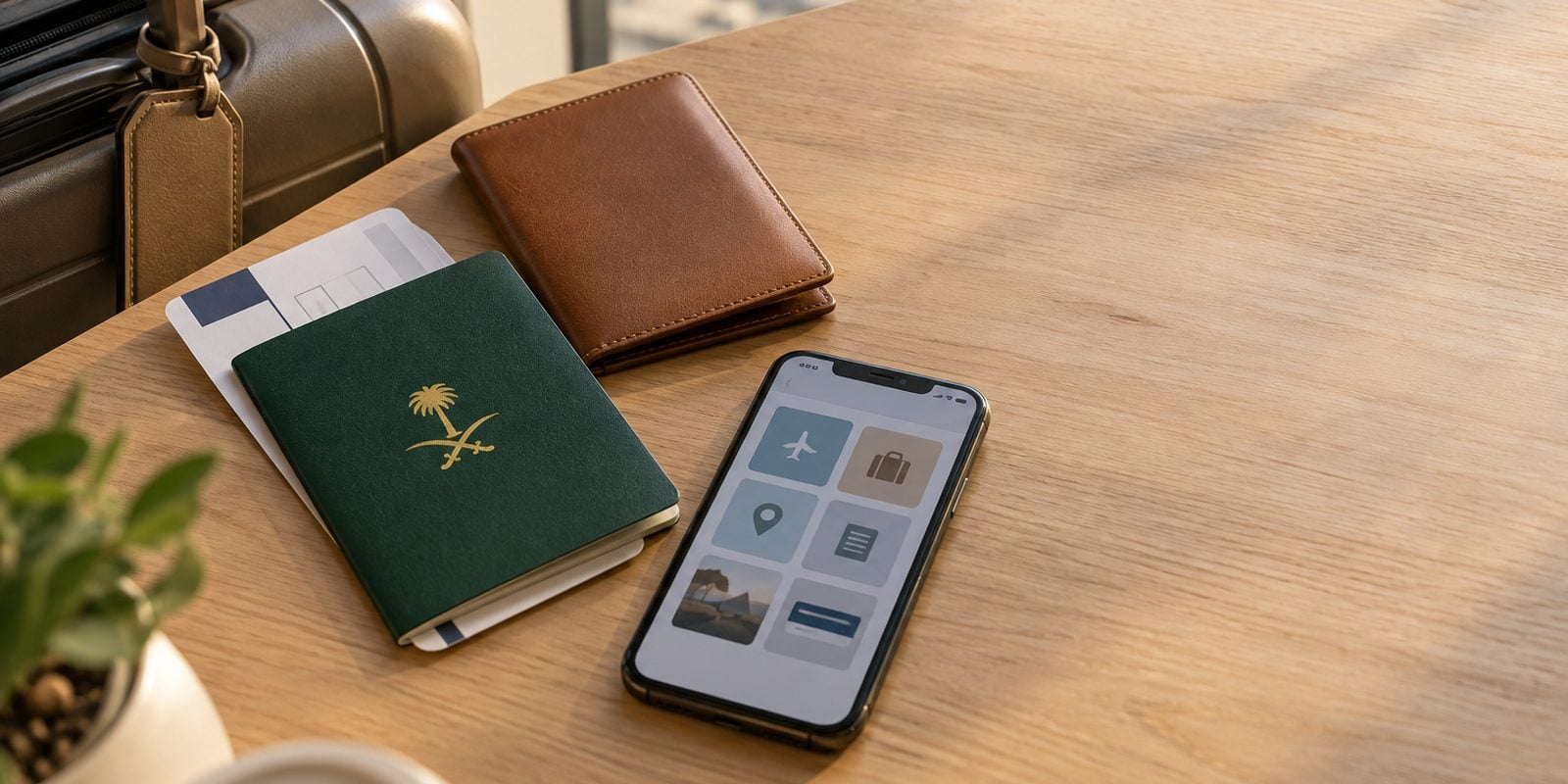
An organized digital copy of your documents cuts the time in half in any emergency.
Many of the problems above are solved faster if your documents are organized and at hand. Set up a folder on your phone and another in your email with everything related to the trip:
| Folder | What it contains |
|---|---|
| Personal documents | A copy of your passport, visa, ID and international driving license. |
| Bookings | Flight tickets, hotel confirmations and car booking, if any. |
| Insurance and emergencies | Your insurance policy, the insurer’s emergency number and the Saudi embassy’s number. |
| Money | Your bank’s contact numbers for blocking cards if they are lost. |
Before you travel
Quick prevention checklist
- A complete visa file, consistent in dates and bookings.
- Travel and medical insurance covering the entire trip.
- Digital copies of your passport, visa and bookings.
- An international driving license if you will rent a car.
- An eSIM installed and activated.
- Two days’ essentials in your carry-on.
For complete preparation, see The 8 most important services you need before traveling.
Quick answers
Frequently asked questions
What are the most common travel problems?
Visa refusal, trip cancellation or delay, lost luggage, lost passports, medical emergencies and scams. Most of them can be avoided with advance preparation and insurance.
What should I do if my visa is refused?
Read the refusal reason in the embassy’s letter and address it before reapplying, making sure the file is complete and consistent.
Am I entitled to compensation if my flight is delayed?
On flights covered by EU rules, you may be entitled to compensation if you arrive 3 or more hours late and the cause was not an extraordinary circumstance; otherwise, check the airline’s terms and your insurance policy.
Does medical insurance replace travel insurance?
No, medical insurance is for treatment, while travel insurance covers cancellation, luggage and delays according to the policy terms.
What should I do if I lose my passport abroad?
Report it to the local police, contact the Saudi embassy or consulate, and present the digital copy you kept.
When should I report lost luggage?
Immediately at the airport before leaving, then submit a written claim to the airline within the set deadline.
Our services
Prepare your trip with us
Official sources for further reading
Saudi Ministry of Foreign Affairs · Your Europe portal: air passenger rights
Travel with peace of mind
We prepare your visa, insurance, international license and internet before you travel. Contact us by phone or WhatsApp on our unified number.
Note: Entry and visa requirements may change, and the final decision on granting a visa rests with the embassy or the competent authority. The information in this article is up to date as of September 2026; always check with the official authority before you travel.