Practical guide · Car rental
Last updated: September 2026 · By the Traveler.sa Destinations Team · Reading time: 9 minutes
Renting a car in Europe opens doors that the excellent trains between major cities can’t reach: mountain villages, quiet lakes and coastal roads with unforgettable views. In this guide we present four benefits of renting a car in Europe, when a car is better than the train, the required documents, and a table of the most common rental problems and how to avoid them.
The short answer
A car gives you freedom of movement, access to the countryside and nature, savings for families and easy travel with luggage, but it’s a burden inside major capitals. Before renting, get an international driving license along with your Saudi license and a credit card in the driver’s name, book early especially for automatics, read the insurance terms and the excess amount, and photograph the car at pickup.
First
Freedom of movement when renting a car in Europe
You stop whenever you like and change your plans without being tied to train or bus schedules. If you like a village on the way, you can spend an extra hour there, and if the weather changes you can switch your destination on the spot.
This flexibility matters especially on family trips, where it’s hard to stick to a strict schedule with children, and where you sometimes need an unplanned stop for rest, prayer or meals.
Second
Access to Europe’s villages and nature
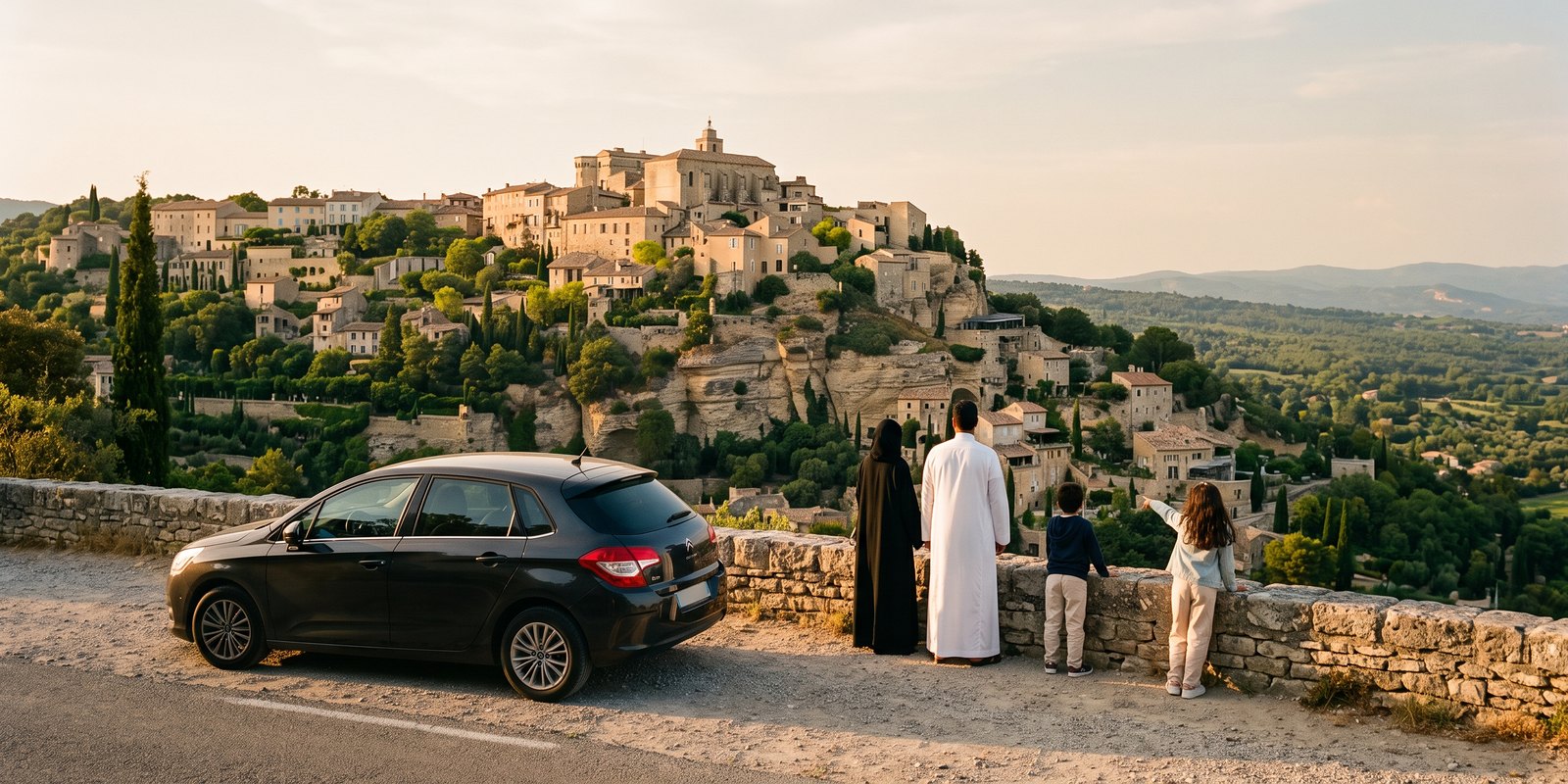
Gordes in Provence: stop at the approach-road viewpoint, parking inside the village is limited.
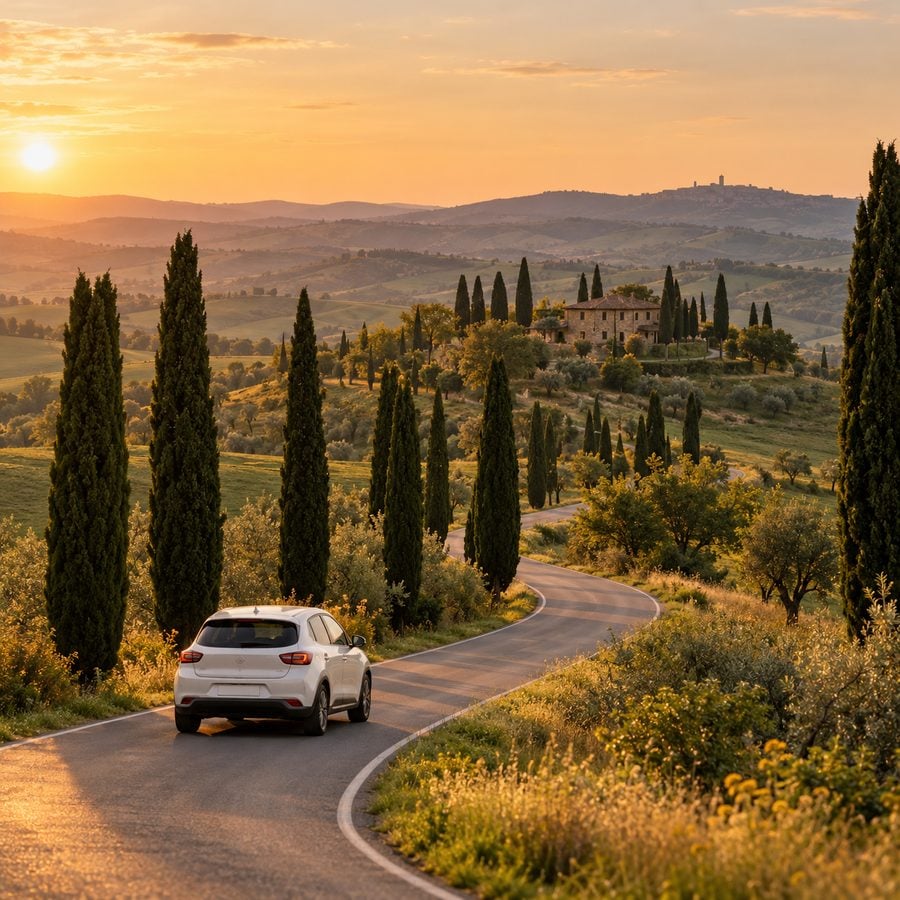
Many of Europe’s most beautiful places, such as Alpine villages, the hills of Tuscany and the Black Forest, are hard to reach by public transport, or require several changes between train and bus, and the last bus in the evening may be very early.
With a car you can combine a lake, a country restaurant and a mountain viewpoint in one day, and return to your accommodation whenever you want. That’s why many travelers choose a car specifically for countryside and nature days.
Examples of trips that become easier by car:
- Moving between lakes and mountain villages in Austria and Switzerland, such as the Zell am See area.
- A tour of the farms and rural villages of Tuscany.
- The coastal roads of southern France and Portugal.
- The Black Forest and its villages in southern Germany.
Third
Savings for families and groups in Europe
For a family or group of three or more, a car may be cheaper than buying train tickets for each person on every journey, because the car rental and fuel are a single cost however many passengers there are, especially on trips covering several small towns or nearby villages.
Watch out for extra costs
When comparing, factor in fuel, road tolls, vignettes and parking, and any fees for returning the car in a different country or adding a second driver, so the picture is clear.
Fourth
Easy travel with luggage
No need to carry bags between stations, platforms and stairs, or to worry about missing a train because of luggage. You put your bags in the car from one hotel door to the next, which makes a big difference with elderly travelers, children and strollers.
Compare before you decide
Car or train? When you don’t need a car
A car isn’t always the best option. In major capitals such as Paris, Rome and Vienna, public transport is faster and cheaper, while a car becomes a burden due to traffic, high parking fees and restricted traffic zones. This table summarizes the best option for each type of trip:
| Type of trip | Best option | Why |
|---|---|---|
| Traveling between major capitals | Train | It arrives directly in the city center without traffic or parking. |
| Getting around a big city | Metro and walking | Parking is expensive, and historic city centers are often restricted. |
| Mountain and lake villages | Car | Transport is scarce and stations are far apart. |
| Coastal roads and scenery | Car | Stop at viewpoints whenever you like. |
| A family with children and lots of luggage | Usually a car | One cost for everyone and more comfort. |
| A solo traveler on a limited budget | Train or bus | Cheaper than rental, fuel and parking. |
That’s why many travelers prefer a mixed plan:
- Travel between major cities by train.
- Rent a car only for the days you head to the countryside or mountains.
- Pick up the car from the train station or airport rather than the city center.
This way you get the car’s flexibility where you need it, and avoid its costs where you don’t. For a practical example of this plan, see the Rome, Venice and Milan program.
Before booking
What you need before renting a car in Europe
Rental companies in Europe usually require a fixed set of documents at pickup, and missing one may mean being refused the car even if the booking is paid. Prepare them all before traveling:
Documents usually required at pickup
| Document | Why it’s required | Note |
|---|---|---|
| Your Saudi license | The original license is the basis for renting | Valid for the entire rental period. |
| International driving license | Many countries and companies require it alongside the original license | We offer the Saudi Automobile Federation license and theIDA license. |
| Passport | To prove identity | Along with the visa if one is required for your entry. |
| Credit card in the driver’s name | To hold the security deposit | Debit cards are not accepted by many companies. |
| Booking confirmation | To match the category, price and extras | Keep it printed or available offline. |
Terms vary by company and country, so read the booking terms before paying.
Booking in advance
Book your car before traveling to get wider options, especially if you need a family car or an automatic transmission, as these categories sell out first in peak seasons.
Insurance and excess
Read what the car insurance covers and the excess you will pay if damage occurs, and compare the excess-reduction options available at booking and at pickup.
Road vignettes
Some countries such as Austria and Switzerland require a motorway vignette or electronic plate registration, and a car rented from another country may not be equipped with it.
Seventh
Choose the right car for your European trip
The size and type of car affect your comfort more than you’d expect: streets in old towns are narrow, parking spaces are small, and mountain roads need a stable car. Use this table as a guide:
| Category | Suits | Watch out for |
|---|---|---|
| Small (economy) | Two people with light luggage, and old towns | Small trunk, and a weaker engine in the mountains. |
| Mid-size | A small family and trips between cities | Usually the most balanced choice. |
| Family car or van | 5 or more people and lots of luggage | Difficult parking in historic centers. |
| 4x4 | Mountains and snow in winter | Higher fuel consumption and greater cost. |
- Transmission: many cars in Europe are manual, so specify automatic explicitly when booking if you need it.
- Child seats: request them in advance, as they are mandatory in EU countries depending on the child’s age and height.
- Winter tires: in winter, ask whether the car is equipped with them, as some countries require them in certain conditions.
Eighth
Driving between European countries
Driving between Schengen countries is usually easy because internal borders have no fixed checkpoints, but the rental company may charge fees or prohibit taking its cars into some countries. Tell them your route when booking, and keep their approval in writing.
If your route crosses an external Schengen border, such as entering from a country outside it, your entry will be recorded in the European Entry/Exit System (EES), fully operational since 10 April 2026, which records fingerprints and a facial image instead of a passport stamp, so allow extra time at the crossing. For road rules in each country, read 8 tips for driving in Europe for the first time.
Avoid them
Common car rental problems and how to avoid them
Most disputes with rental companies recur for the same reasons, and can be avoided with simple steps before pickup and at return:
| Problem | How to avoid it | What to do if it happens |
|---|---|---|
| Refusal to hand over the car | An international license and a credit card in the driver’s name. | Ask for the reason for refusal in writing and review the cancellation terms. |
| Claims for pre-existing damage | Photograph the car from every side at pickup. | Submit your photos and the signed pickup report. |
| High fuel charges | Know the refueling policy and return it full. | Keep the receipt of your last refuel near the airport. |
| A traffic fine arriving after you return | Stick to speed limits and avoid restricted zones. | Pay it on time to avoid extra fees. |
| Unexpected cross-border fees | Tell the company your route when booking. | Review the contract and ask for a breakdown of fees. |
| Breakdown or accident | Save the company’s emergency number before setting off. | Call the company immediately, and 112 in an emergency. |
At pickup
Rental car checklist before setting off
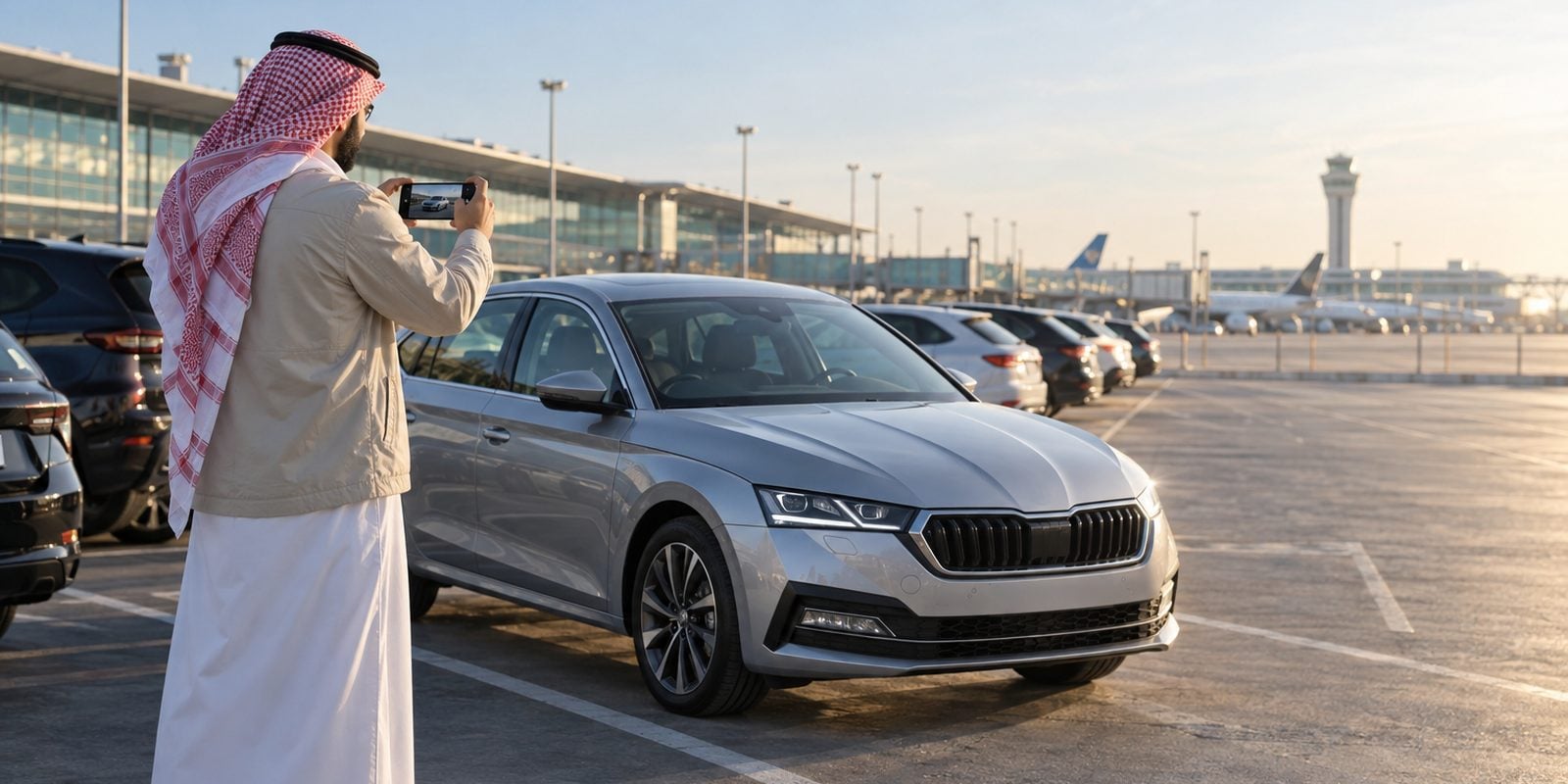
Photographing at pickup protects you from any claim for damage you didn’t cause.
- Photograph the car from every side, plus the wheels, glass, fuel level and odometer.
- Confirm the fuel type and the refueling policy on return.
- Ask about crossing into other countries and any related fees.
- Check that the reflective vest and warning triangle are in the car.
- Ask about the motorway vignette if you will drive in Austria or Switzerland.
- Save the rental company’s emergency number.
At return, ask for the car to be inspected in your presence and get a return receipt confirming its condition and fuel level, then follow your card statement until the security deposit is released.
Quick answers
Frequently asked questions
Is my Saudi license enough to rent a car in Europe?
Many countries and rental companies require an international driving license alongside it, so get one before traveling and carry it with the original.
Can I rent a car with a mada card or a debit card?
Many companies require a credit card in the main driver’s name to hold the security deposit, so check the terms before booking.
Can I drive between European countries in a rental car?
Usually yes, but some companies charge fees or restrict certain countries, so tell them your route in advance.
How much does it cost to rent a car in Europe?
The actual cost consists of the daily rental, car insurance or excess reduction, fuel, road tolls and vignettes, parking, additional driver and child seat fees, and one-way fees for returning in another country, which can be high. Prices are higher in the summer season (July and August), and automatics are more expensive than manuals and sell out first, so book early.
Is one Schengen visa enough to drive between European countries?
Usually yes, as the uniform Schengen visa allows travel between Schengen countries, but European countries outside Schengen such as the UK have separate entry requirements. Apply to the embassy of the country where you will spend the longest time, and the final decision rests with the embassy.
Do I need extra insurance?
Review what the car insurance and excess cover, and make sure your travel insurance covers medical emergencies.
Our services
Prepare your trip with us
Official sources for further reading
Official EU travel portal · Your Europe portal: road rules
Ready for a road trip?
We prepare your international driving license, car booking and insurance before you travel. Contact us by phone or WhatsApp on our unified number.
Note: Rental terms and driving laws vary from country to country and company to company and may change, so check with the official authority and the booking terms before traveling. The information in this article is up to date as of September 2026.