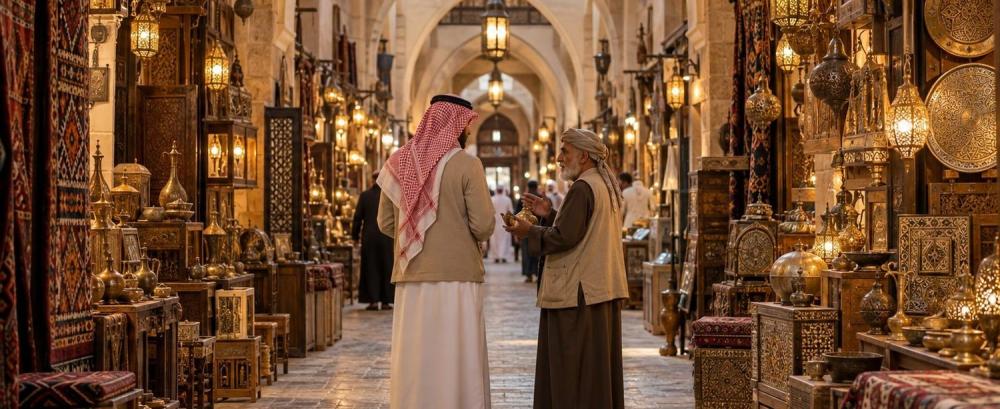
Practical guide · Trip planning
Last updated: September 2026 · By the Traveler.sa Destinations Team · Reading time: 8 minutes
Travel is fun and learning at the same time, not just a holiday to relax; it is a chance to discover new cultures, learn skills and come away with experiences that stay with you. Many people return from their trips with lots of photos and few memories, and the difference between an ordinary trip and one that enriches you lies in how you plan it. This guide offers practical steps and ready-made tables that turn your next trip into an experience you learn from and enjoy at the same time.
The short answer
Choose a destination that fits your interest (history, nature or food), get to know its culture before traveling, learn ten phrases of its language, book at least one local experience such as a cooking class or a guided walking tour, balance tours with rest, and prepare your documents early so you can focus on the experience itself rather than the paperwork.
First
What does travel give you?
A good trip leaves an impact that goes beyond its days. The main things you can gain from it:
| Benefit | What it means | Practical example |
|---|---|---|
| Understanding cultures | A deeper awareness of how people and their customs differ | Visiting a local market and asking vendors about their products |
| Practical skills | Planning, budgeting and problem-solving | Arranging transport between two cities yourself |
| Learning languages | Warmer communication with locals | Ordering your meal in the local language |
| Recharging | New energy and a different perspective | A day in nature without a packed schedule |
For the psychological side of travel, also read about The benefits of travel for mental health.
Second
Choose a destination that matches your interests
The first step toward an enriching trip is to start from your own interest, not from the most popular destination this season. When you choose a place that sparks your curiosity, you will read about it with passion, notice its details and come back with real knowledge. Before booking, decide what you want to come back with: an understanding of a particular civilization, a different nature experience, or a new skill such as cooking or photography.
| Your interest | Suggested destinations | What you learn |
|---|---|---|
| History and civilizations | Turkey, Cairo, Italy | Layers of civilizations in a single city |
| Locations on Google Maps: Turkey · Cairo · Italy | ||
| Nature and hiking | Georgia, Switzerland, Norway | Mountain trails, lakes and rural villages |
| Locations on Google Maps: Georgia · Switzerland · Norway | ||
| Food and cuisines | Thailand, Italy, Turkey | Cooking classes, markets and small farms |
| Locations on Google Maps: Thailand · Italy · Turkey | ||
| Arts and museums | Vienna, Amsterdam, Madrid | Museums, galleries and distinctive architecture |
| Locations on Google Maps: Vienna · Amsterdam · Madrid | ||
Choose one destination that combines most of what you love, instead of hopping between many destinations on a short trip.
Check entry requirements before you get attached to a destination
Procedures vary greatly from one destination to another, and knowing them early determines when to book. Here is a summary for Saudi citizens as of September 2026:
| Destination | Entry for Saudi citizens | Note |
|---|---|---|
| Turkey | Usually visa-free for up to 90 days within 180 days | Residents: e-visa |
| Georgia | Visa-free for stays of up to one year | Check passport validity |
| Egypt | E-visa or visa on arrival, usually | Egypt visa |
| Italy, Switzerland and Norway | Prior Schengen visa | Schengen visas |
| Thailand | Visa-free for up to 30 days | Complete the TDAC digital arrival card before traveling |
Requirements may change, and residents should check the requirements for their nationality, so verify with the official authority before booking.
Third
Read about the destination before you travel

Countries’ official tourism websites are a reliable source of information and events, such as Visit Saudi for domestic tourism,the official Georgia tourism website, andSwitzerland Tourism. Start with them before blogs and videos, as they list events with their correct dates.
Two hours of reading before traveling changes the way you see a place: a landmark whose story you know becomes more than just a photo, and a dish whose origin you know becomes an experience rather than a passing meal.
About two weeks before traveling, set aside time to learn about:
- A brief overview of the destination’s history and key milestones.
- Social customs, visiting etiquette and dress at religious sites.
- Local dishes worth trying.
- Events and festivals that coincide with your trip.
- Transport options and common payment methods.
Fourth
Learn phrases in the local language
You do not need to master a new language to benefit from it on your trip. Ten simple phrases are enough to break the ice with locals and give you a warmer experience in restaurants and markets.
| Situation | What you need to learn | Tip |
|---|---|---|
| Greetings and courtesy | Hello, thank you and sorry | Start every interaction with them |
| Shopping | Basic numbers | Useful for prices and bills |
| Getting around | Asking for directions and places | Keep your hotel’s name written in the local language |
| At the restaurant | Ordering food and asking about ingredients | Ask about meat and halal with a clear phrase |
| Emergencies | A phrase to ask for help | Save the local emergency number |
Download a translation app that works offline, but try to start speaking yourself before relying on it.
Fifth
Take part in local experiences
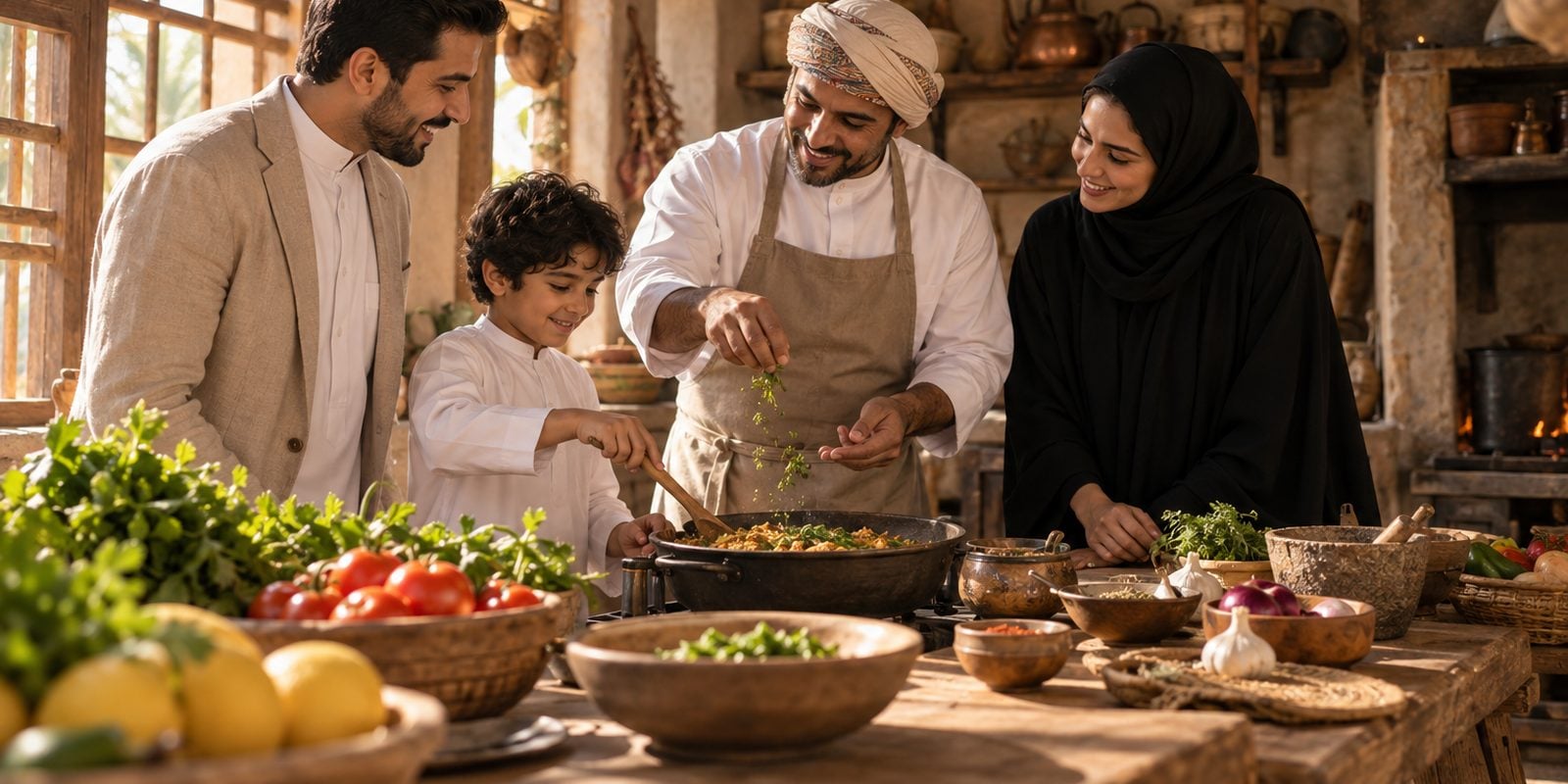
One cooking class with locals teaches you more about a destination than a full day of quick tours.
Cooking classes, local markets and tours with local guides give you a deeper understanding than quick tours. A local guide tells you the story behind the place, and a cooking class teaches you something to take home with you.
| Experience | What you learn from it | How to choose it |
|---|---|---|
| Guided walking tour | The history and stories of the place | A small group instead of a crowded bus |
| Cooking class | A local dish you can recreate at home | Ask about halal ingredients in advance |
| Local market | The daily life of city residents | Visit in the morning when locals shop |
| Craft workshop | Traditional local craftsmanship | Choose a workshop run by local artisans |
| Cultural event | The place’s arts and occasions | Check the official tourism website’s calendar |
Sixth
Balance tours and rest
A packed schedule turns the trip into a race, and you come back tired, remembering little. Plan no more than two main activities a day, and leave time to sit in a café, wander without a destination, or go back to your accommodation to rest.
A simple rule
One quiet day after every two or three days of touring restores your energy and gives you time to absorb what you have seen.
If you are traveling with family, ask each member for one activity they want and make it part of the program. This way everyone feels the trip is theirs, and there are fewer complaints about long tours.
With family
Make children partners in learning
Children learn from travel more than we expect, provided they take part in it rather than being dragged along behind the program. Give each child a small role before the trip: researching an animal the destination is known for, a dish they want to try, or a landmark they would love to see.
- Let the child choose one activity each day so they feel the trip is theirs.
- Look for programs or sections at museums dedicated to children, as many offer interactive activities.
- Give them a small notebook to stick entry tickets in and draw what they saw.
- Teach them two words of the local language and let them use them with a vendor or waiter.
- End each day with a simple question: what was the best thing you learned today?
Eighth
Document your trip
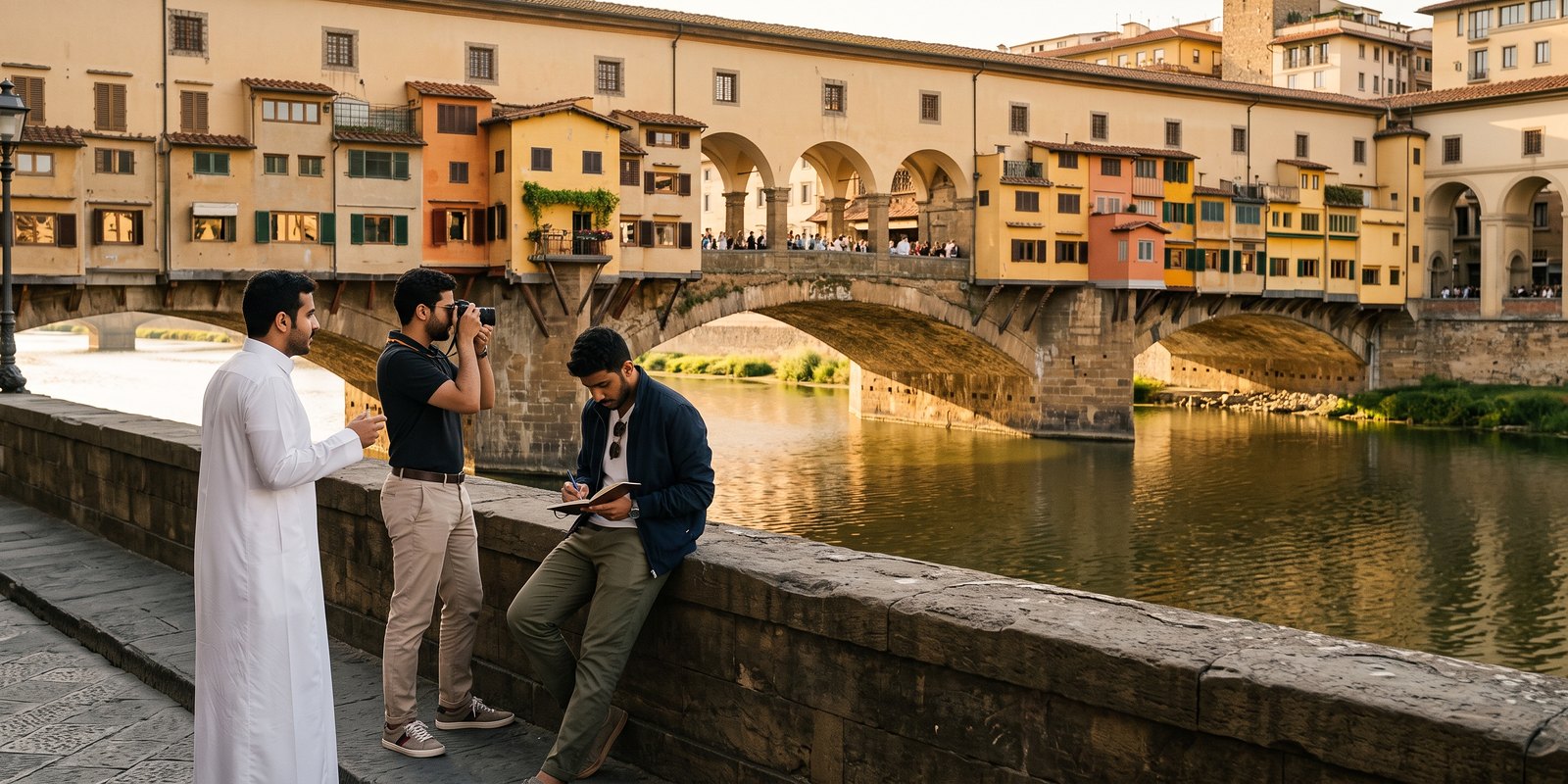
Ponte Vecchio in Florence: photograph it from the nearby Santa Trinita bridge at sunset.
Write down your notes and keep your photos; they are a memory of the trip and a reference for future trips. Each evening, write a few lines: the best thing you saw, what you learned, and what you would do differently. These notes become your personal guide for the next trip, or advice you share with friends. And keep a museum ticket, a paper map or a receipt from a restaurant you loved; these small details bring back the atmosphere of the trip years later more than hundreds of photos do.
Before you travel
Planning gives you time for the experience
The earlier you prepare your documents, the more you can focus on the trip itself. We handle visa procedures,insurance,international internet, andcertified translation.
A quick checklist before departure:
- A passport valid for a sufficient period, and a visa if required.
- Travel insurance covering the entire trip.
- An eSIM installed so you can use maps and translation from the moment you land.
- Digital copies of documents and bookings.
- A list of local experiences you want to try, ranked by priority.
- A bank card activated for international use.
Tenth
Save without losing the experience
Traveling off-peak, staying in accommodation with a kitchen, and using public transport are among the best ways to save. In July and August, flight tickets from Saudi Arabia to Europe and Turkey usually rise by about 30 to 60%, so traveling in spring or autumn saves a quarter of the trip cost or more. Public transport in particular is a learning experience in itself, putting you in the middle of locals’ daily life. For more, read How to save money and avoid scams while traveling.
Quick answers
Frequently asked questions
How can I make my trip a learning experience?
Decide what you want to learn before booking, read about the destination, book at least one local experience such as a cooking class or a guided tour, and write down what you learned each evening.
Is solo travel good for learning?
Yes, because it pushes you to connect more with people and rely on yourself. Read our guide to Solo travel destinations.
How do I choose my next destination?
Start with your interest: history, nature or food, then choose the destination that combines most of what you love, and check its entry requirements.
Do I need to learn the local language before traveling?
No, a few basic phrases along with a translation app are enough to ease communication and add warmth to your experience.
How can I save on a long trip?
Travel in spring or autumn instead of the July–August peak, choose accommodation with a kitchen, and rely on public transport and its day passes; these three clearly lower the cost.
What is the best source of information about a destination?
Countries’ official tourism websites, as they are a reliable source of information and events.
Our services
Prepare your trip with us
Official sources for further reading
Visit Saudi · Georgia tourism · Switzerland Tourism · Thailand Digital Arrival Card
Your next trip starts with planning
We arrange your visa, insurance, internet and translation so you can focus on the experience itself. Contact us by phone or WhatsApp on our unified number.
Note: Entry and visa requirements may change, and the final decision on granting a visa rests with the embassy or the competent authority. The information in this article is updated to September 2026; always check with the official authority before traveling.