
Practical guide · Traveling to Europe
Last updated: September 2026 · By the Traveler.sa Destinations Team · Reading time: 9 minutes
The most important tips before traveling to Europe for the first time start with one idea: a first trip to Europe needs different preparation from nearby destinations: a visa with precise requirements, multiple countries, different transport systems and currencies, and new border procedures since April 2026. In this guide we have gathered the most important things you need to know before booking and after arriving, with tables on Schengen rules and seasons and ready-made plans for a first trip, so your journey runs smoothly from day one.
The short answer
Start your Schengen visa well before travel, and apply to the embassy of the country where you will spend the longest time. Prepare approved medical insurance and bookings that match your itinerary, and respect the 90-days-within-180-days rule. On your first entry, your fingerprints and facial image will be recorded in the EES system. For a first trip, choose two or three neighboring countries and rely on trains between cities. A week in summer costs roughly 5,350–14,500 per young traveler and 10,750–26,300 for a couple including flights, depending on the country, and direct flights from Riyadh or Jeddah to most major capitals take 5–7 hours.
First
Schengen visa: start early
The Schengen visa is your gateway to most European countries, and understanding its basic rules saves you many mistakes. This table summarizes them:
| Rule | What it means for you |
|---|---|
| One visa for several countries | You can move between Schengen countries within its validity without a new visa. |
| Embassy to apply to | The country where you will spend the longest time, or the country of first entry if the durations are equal. |
| Length of stay | Usually 90 days within any 180-day period, and within the limits your visa allows. |
| Medical insurance | A basic requirement covering the entire period and all Schengen countries. |
| Multiple entries | The embassy may grant it with longer validity depending on your travel history and file; the decision is theirs. |
| Countries outside Schengen | Such as the United Kingdom and Cyprus, which have their own entry rules. |
Biometrics appointments get crowded in summer and holiday seasons, so book your appointment early. Browse Schengen country visas, and for more, see the European Commission page on Schengen.
Second
Essential documents for your visa file
Most Schengen embassies ask for a similar set of documents, with minor differences by country:
| Document | Important note |
|---|---|
| Passport | Valid for at least 3 months after departure, issued within the last 10 years, with blank pages. |
| Personal photos | Recent and meeting the embassy’s specifications for size and background. |
| Financial and employment proof | A salary certificate and a recent bank statement showing your ability to cover the trip. |
| Medical insurance | Approved medical insurance covering the entire period and all Schengen countries. |
| Bookings | Flight and hotel reservations matching your itinerary. |
| Translation | When needed, through certified translation. |
A general list; each embassy sets its final requirements.

Third
Choose the right travel season
Each season in Europe has its own character, and your timing affects the weather, crowds, and availability of visa appointments:
| Season | Weather | Suits |
|---|---|---|
| Spring (March–May) | Mild, blooming gardens, and fewer crowds | City tours, walking, and gardens. |
| Summer (June–August) | Peak season, long days, and bigger crowds | Lakes, mountains, and families. |
| Autumn (September–November) | Beautiful colors and pleasant weather | Those who want pleasant weather with fewer crowds. |
| Winter (December–February) | Christmas markets, snow, and shorter days | Skiing, Christmas markets, and snow. |
In July and August the summer holiday in Saudi Arabia coincides with Europe’s peak, so flight tickets usually rise by about 30 to 60% and city hotels by about 25 to 50% compared with spring and autumn. For example, a week in Spain in summer costs a young traveler roughly 7,900 to 13,900 and a couple 15,000 to 26,200 including flights.
Here is the cost of a week in the most popular first-trip destinations at summer prices, including round-trip flights, accommodation, food, trains, and attractions, taken from our detailed guides for each destination (and adjusted to 7 days where the program length differs):
Approximate cost of a 7-day trip in the summer season (SAR)
| Destination and duration | Young travelers (per person) | Couple (for two) |
|---|---|---|
| Poland (Warsaw and Krakow), 7 days | 5,350–9,600 | 10,750–19,200 |
| Vienna and Prague, 7 days | 6,200–12,150 | 12,600–24,100 |
| Netherlands (Amsterdam and surroundings), 7 days | 7,550–14,500 | 13,800–26,000 |
| Spain (Madrid and Barcelona), 7 days | 7,900–13,900 | 15,000–26,200 |
| Italy (Rome, Venice, and Milan), 7 days | 7,250–13,200 | 14,400–26,300 |
Estimated figures for the summer (peak) season as of September 2026; young travelers per person in shared accommodation, and couples for two in a private double room. They vary by departure city, booking date, and type of accommodation. They do not include shopping, and they roughly include visa and insurance fees under miscellaneous.
To save on your first trip: book flights at least three months before summer, choose a hotel near the main metro or train station instead of the historic city center, and buy a weekly transit pass in each city. Central and Eastern Europe (Poland, Czechia, and Hungary) are usually cheaper than Italy, Spain, and the Netherlands for accommodation and food.
How long is the trip from Saudi Arabia to Europe?
| Destination | From Riyadh | From Jeddah |
|---|---|---|
| Rome and Milan | About 5.5–6 hours direct | About 5–5.5 hours direct |
| Paris and Frankfurt | About 6–6.5 hours direct | About 6–6.5 hours direct |
| Prague and Budapest | 7–10 hours with one stop | 7–10 hours with one stop |
| Warsaw | About 5.5–6 hours direct seasonally, otherwise 7–10 with a stop | 7–10 hours with a stop |
| Amsterdam | 8–11 hours with a stop | About 6.5 hours direct |
| Vienna | About 5.5 hours direct | About 5.5 hours direct (fewer flights) |
Flight durations are approximate and vary by departure city, airline, and stopover, and some direct flights are seasonal.
Ready-made plans
Plan your route realistically

Two or three neighboring countries are enough for a first trip, with at least three days for each major city.
One of the most common mistakes on a first trip is trying to visit many countries in a few days, so most of the time is lost in transit. It is better to choose two or three neighboring countries and give each major city at least three days.
Here are tried-and-tested plans suited to a first trip, each with a detailed guide on our blog:
Suggested plans for a first trip to Europe
| Plan | Route | Suggested duration |
|---|---|---|
| Classic Italy | Rome, Venice, and Milan by high-speed train | 7–10 days |
| Locations on Google Maps: Rome · Venice · Milan | ||
| Alpine nature | Zurich then the lakes of Austria by car | 7–9 days |
| Location on Google Maps | ||
| Central Europe | Vienna then Prague by train | 6–8 days |
| Locations on Google Maps: Vienna · Prague | ||
| The Netherlands and its canals | Amsterdam and surroundings | 5–6 days |
| Location on Google Maps | ||
Approximate durations for a comfortable, unhurried trip.
When planning, keep these points in mind:
- Make the itinerary in your visa file match your actual plan as closely as possible.
- Start with the largest or farthest city, and end with the one closest to your return airport.
- Book long train journeys in advance, as prices usually rise as the date approaches.
- Leave a flexible day for rest or any unexpected change.
New in 2026
On arrival in Europe: the EES system
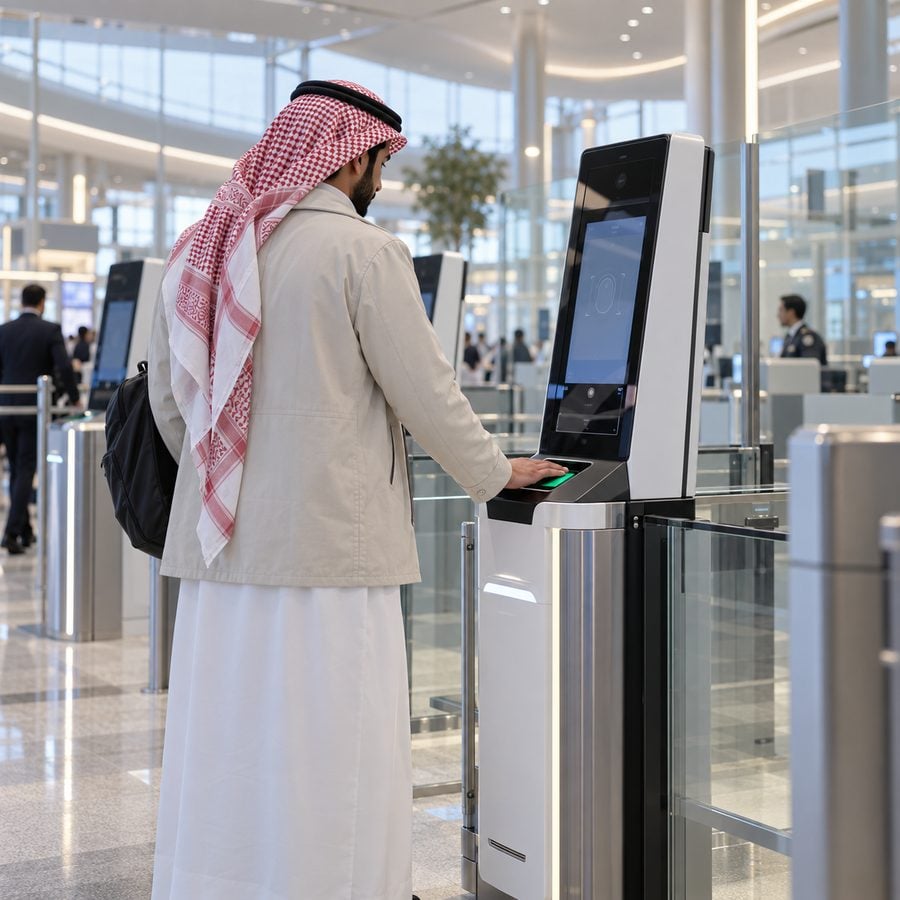
Since 10 April 2026, the European Entry/Exit System (EES) has been fully operational in the Schengen countries, after a gradual start in October 2025. The system digitally records the entry and exit of travelers from outside the European Union, replacing the traditional passport stamp.
On your first entry, your fingerprints, facial image, and passport details are recorded, so your first arrival procedures may take longer; don’t book a connecting flight or train immediately after landing. On later visits the procedures are usually faster. For details, see the official EU travel portal.
Practical tip
Keep paper and digital copies of your hotel booking, return ticket, and insurance, as the passport officer may ask for them on arrival.
Sixth
Getting around between and within cities

Swiss panoramic trains: reserve seats early in summer, as they sell out quickly.
Trains
The fastest and most comfortable option between major cities, often arriving directly in the city center.
Long-distance buses
A cheaper option for medium distances, but they take longer.
Within cities
The metro and daily or weekly transit passes are the cheapest and easiest.
Driving
If you will drive, get an International Driving Permit, and you can book a car in advance. Read also Tips for driving in Europe.
Seventh
Money and internet
- The euro is the currency of most countries, but some Schengen countries have their own currencies, such as Switzerland, Czechia, Hungary, and Poland.
- Cards are widely accepted; carry a small amount of cash for emergencies and small shops.
- Inform your bank of your travel and make sure your card is enabled for international use before departure.
An eSIM for Europe covers dozens of countries with a single plan, so you don’t need to change your SIM when moving from one country to another. Just make sure your phone supports this technology, and install the eSIM before takeoff. For the full list of currencies and plug types, see Things to know before traveling to Europe.
Avoid them
Common mistakes on a first trip to Europe
| Mistake | Better alternative |
|---|---|
| Cramming 5 countries into a week | Two or three neighboring countries. |
| A non-refundable booking before the visa | A temporary reservation for the visa file, then confirm. |
| Overstaying the permitted period | Count the days accurately, as the EES system records them automatically. |
| Leaving the biometrics appointment to the last few weeks | Book it early before holiday seasons. |
| Relying on a lot of cash | Two bank cards and a small amount of cash. |
Ninth
Halal food and prayer
Halal food is available in most major European cities, especially in Turkish, Arab, Indian, and Pakistani restaurants, and is scarcer in villages and mountain areas. Ask about the source of the meat before ordering if the restaurant is not well known, and plan your meals on long travel days by carrying snacks.
Major cities have mosques and Islamic centers easily reached by public transport; use an app that shows prayer times and the qibla and works offline. Remember that in summer, prayer times are spread far apart in northern countries because of the long days.
Tenth
Helpful etiquette and customs
- Many shops close early on Sundays, so plan your shopping in advance.
- Tipping varies from country to country, and in some it is added to the bill.
- Watch your belongings in crowded places and train stations.
- Respect quiet rules on public transport and in residential areas.
A week before travel
Final preparation checklist
- You have received your visa and checked its dates and number of entries.
- Your medical insurance covers the entire trip.
- Digital copies of your passport and bookings are saved on your phone.
- Your eSIM is installed, and a European power adapter is in your bag.
- Your main train tickets are booked.
- Your bank card is enabled for international use.
Quick answers
Frequently asked questions
How long does it take to issue a Schengen visa?
The usual period is 15 days and it may extend to 45 days. You can apply no earlier than six months and no later than 15 days before travel, so apply early before holiday seasons.
Do I need a visa for each country I visit?
No, a single Schengen visa is enough for the countries in the area, while European countries outside Schengen have their own rules.
How much does a first trip to Europe from Saudi Arabia cost?
A week in the summer season including flights costs roughly 5,350 to 9,600 per young traveler in Poland, and 7,250 to 14,500 in Italy, Spain, or the Netherlands. For a couple, 10,750 to 19,200 in Poland, and 13,800 to 26,300 in Western Europe. The figures usually drop by about a quarter in spring and autumn.
What is the EES system, and does it apply to Saudis?
A European system fully operational since 10 April 2026 that records the entry and exit of non-Europeans with fingerprints and a facial image instead of a passport stamp, and it applies to Saudi Schengen visa holders.
What are the best countries for a first trip to Europe?
Italy on a Rome, Venice, and Milan route, or Switzerland and Austria for nature lovers, or Vienna and Prague for Central Europe, limiting yourself to two or three countries.
How many flight hours from Saudi Arabia to Europe?
To Rome, Milan, Paris, and Frankfurt about 5 to 6.5 hours direct from Riyadh or Jeddah; to Vienna about 5.5 hours direct; to Amsterdam about 6.5 hours direct from Jeddah (and from Riyadh with a stop); while Prague and Budapest take about 7 to 10 hours with one stop.
Read also
Articles you may like
Our services
Prepare your trip with us
We also prepare Schengen visa files for other destinations: Romania visa · Bulgaria visa · Slovakia visa · Lithuania visa · Denmark visa · Sweden visa.
Official sources for further reading
European Commission: Schengen · Official EU travel portal · Your Europe portal: travel documents for non-EU nationals
First trip to Europe?
We prepare your Schengen visa file, insurance, bookings, and internet before you travel. Contact us by phone or WhatsApp on our unified number.
Note: Entry and visa requirements may change, and the final decision to grant a visa rests with the embassy or the competent authority. The information in this article is up to date as of September 2026, and it is always advisable to check with the official authority before traveling.